


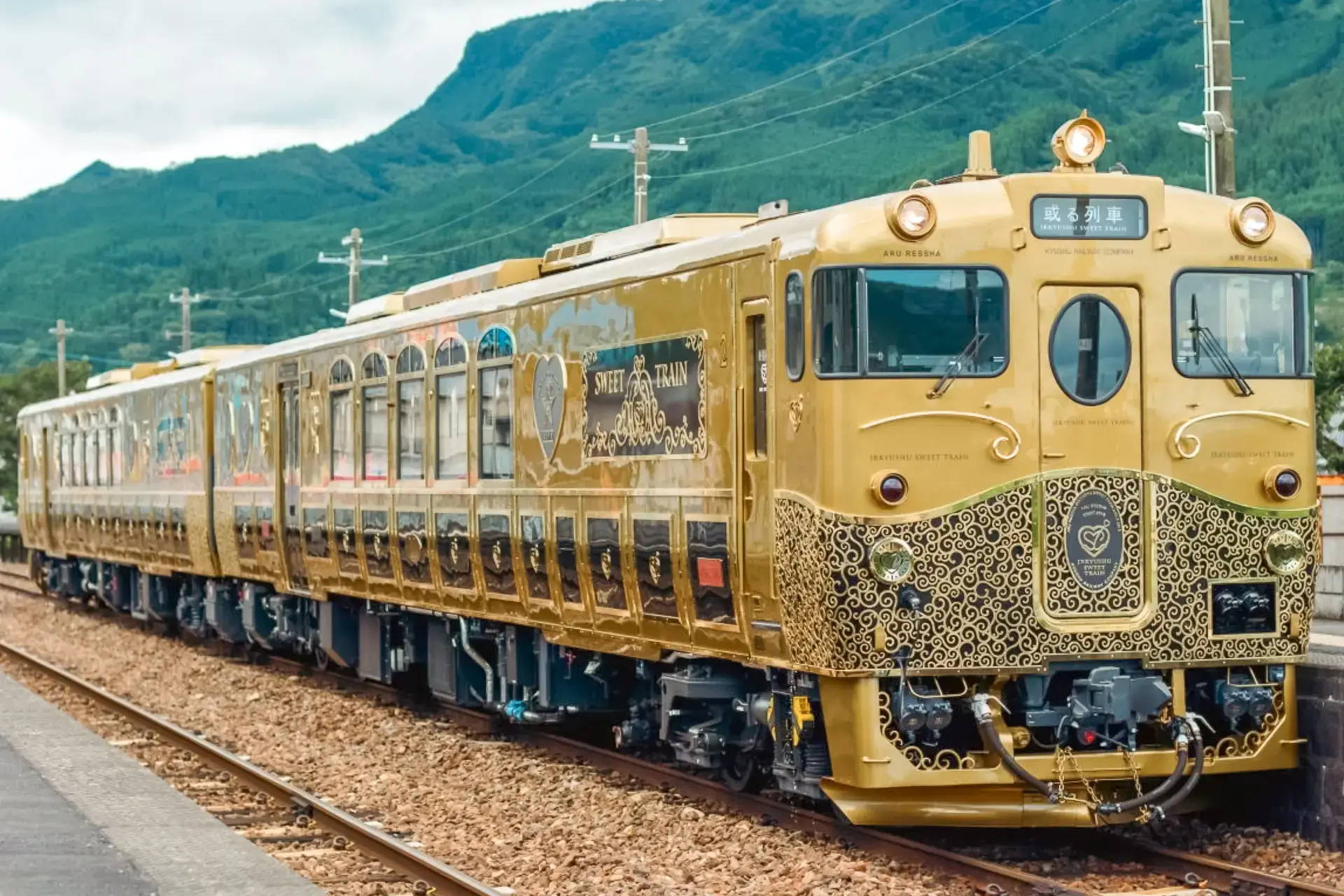
A unique experience that will allow you to discover unique and little known places in Japan while savouring seasonal regional specialities prepared by Japan’s best chefs. All of this, with a commitment to sustainable tourism, as travelling by train is one of the greenest transport options.
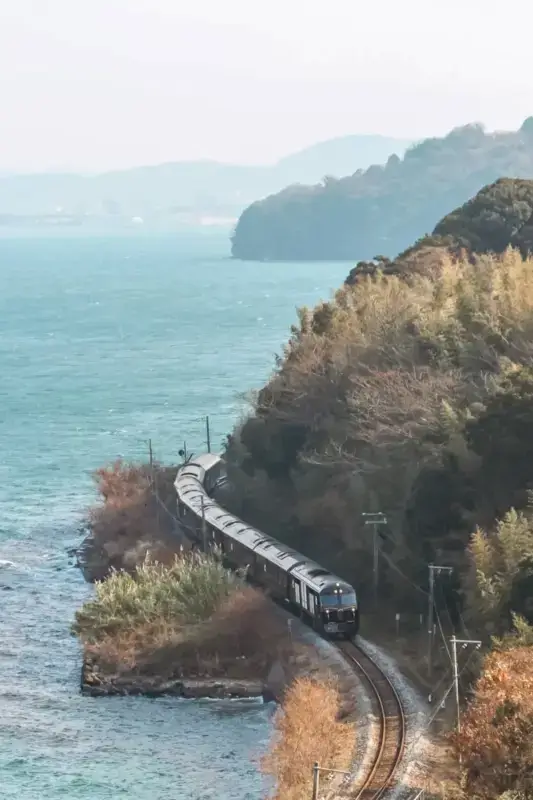
When you visit Japan you quickly realise how important trains are in the country. A vast railway network that combines historic rail lines with ultra-modern, state-of-the-art ones.
The first passenger steam locomotives debuted in Japan during the Meiji Restoration in 1872 and, since then, railroads are the primary mode of passenger transportation in Japan.
An example of this extensive use of the train is that, as the JR pass agency points out, 46 of the top 50 busiest bus stations in the world are located in Japan. Within this vast offer, there are numerous train companies and train types in the country. Today we’ll tell you a little bit more about some of the most unique, quirky, modern and delightful trains in the country.
When it comes to travel, one of the most efficient ways to contribute to sustainability is by using low-carbon methods of transport. While rail is still a long way from carbon neutrality, it is greener than car and air travel. To illustrate this in a more concrete way, here is an example from The Japan Times: a train journey from Tokyo to Osaka emits one twelfth less CO2 than a Tokyo-Osaka flight. Likewise, making the same journey by car (petrol Toyota Camry) on the highway emits about 30 times more CO2 than travelling by Shinkansen.
Can you imagine that while marvelling at the incredible views that change from the sea to the mountains, you can enjoy a tasting menu or sushi prepared by a craftsman? This is possible when you travel by train in Japan. Train journeys include numerous dishes prepared with local ingredients and regional specialities!

It includes fresh fish from Toyama Bay, as well as farmland delicacies produced from mineral-rich snow melt-water of Tateyama. The meals are provided by the Toyama Sushi Quotient Life Hygiene Trade Association (a union members who own sushi restaurants in Toyama Prefecture) and Gomankoku Co.,Ltd. (chef Tsuneo Yasui).
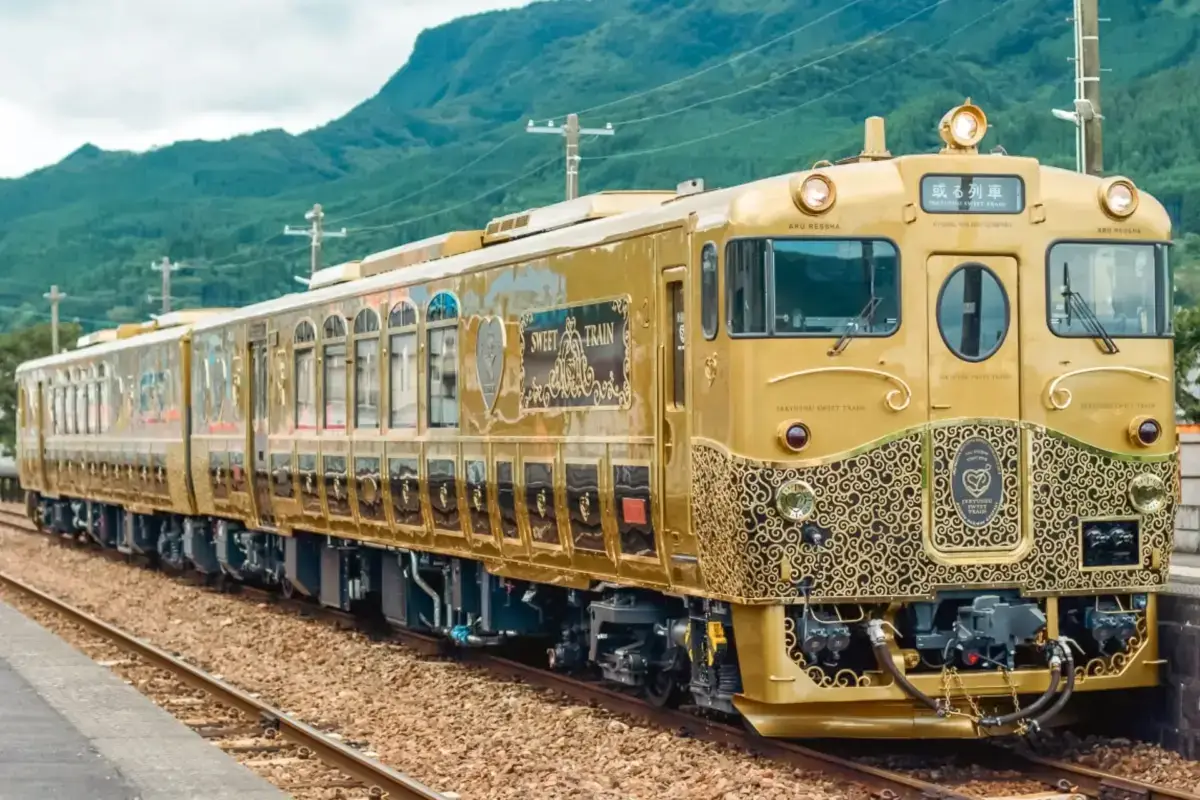
Chef Narisawa is committed to sustainability, which is why he cooks attractive dishes designed around the natural environment, such as “Sustainable and Beneficial Gastronomy” (gourmet food that is sustainable and is beneficial for both the soul and the body), and “Evolve with the Forest” (living with the forest).
One of the great wonders of train travel is the breathtaking, constantly changing views. While you’re resting and relaxing with a glass of wine, you can be dazzled by the foliage of a forest and a little later by the deep blue sea.
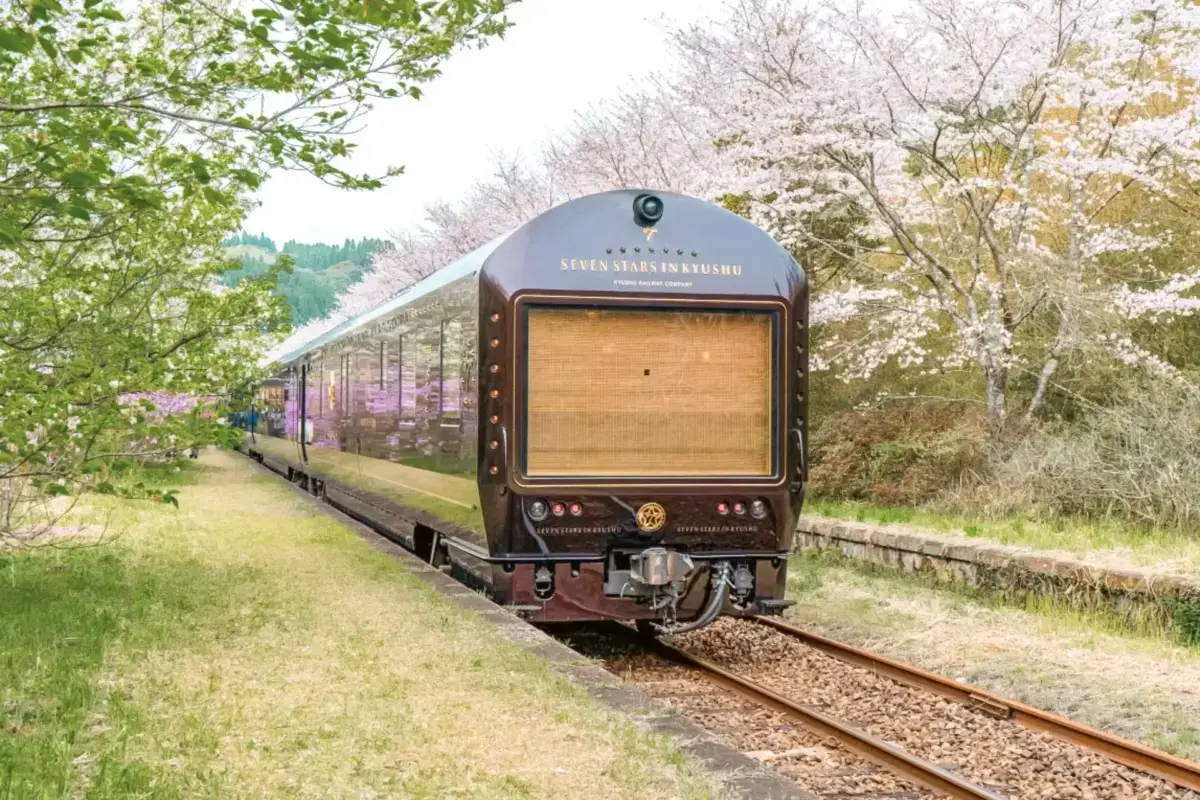
The train itself is a work of art, and its Gallery Shop offers travellers local products, including traditional crafts of Kyushu, works of modern artisans, and specialties of Kyushu’s unique cuisine. For the Seven Stars it is also important to connect with the local people and to integrate into the daily life of the residents. For this, they “ask cooperation from residents along our route to welcome our guests by waving flags at the train or planting flowers along the tracks”.

Apart from the views and the gourmet experience, the trains offer a unique experience because of their own idiosyncrasies, they are unique pieces of design with their own personality.
An example of this is The Royal Express. “The Royal Express expresses local identity in refined form at the same time to pursue beautility with universality. To that end, we act in enhancement of universal design so that contemporary can manage in combination the skill of traditional material and craftsman in material and construction method to come out of advanced technology”.
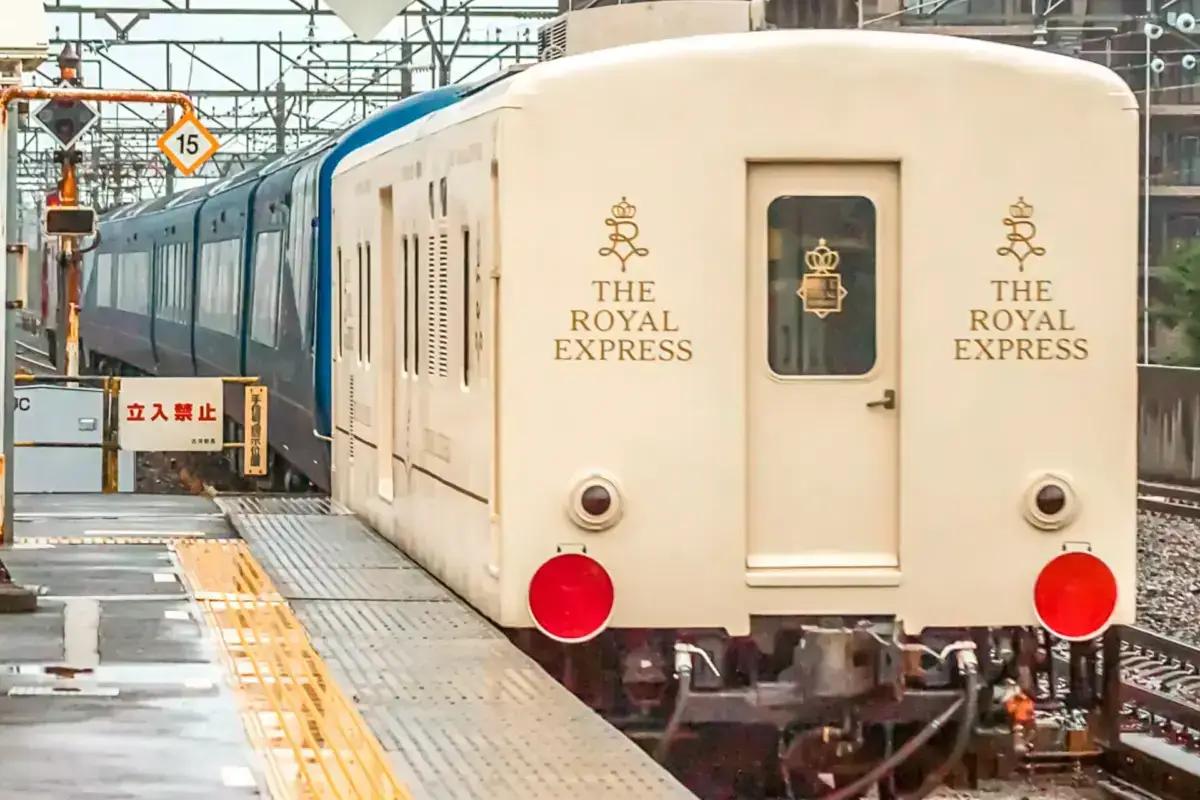
Trains in Japan have a long history and tradition, and are themselves an important part of Japanese culture. Keeping them alive is part of the preservation of their culture, and travelling on them is a way of getting to know a little bit more about life in this country.
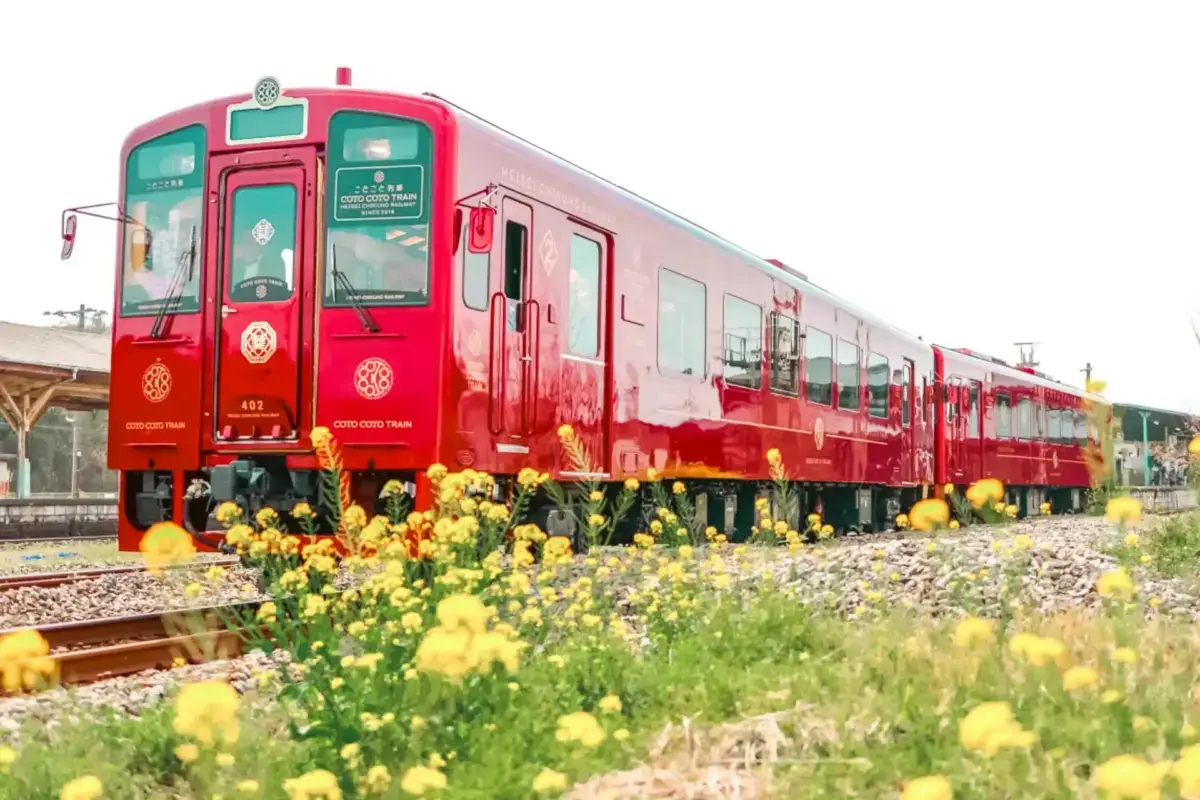
Many of the high-end trains that offer a unique experience travelling on them not only promote the socio-economic wellbeing of the place (through a gastronomy based on local products and that preserves the culinary traditions of Japan, or by selling souvenirs made by local artisans from the localities along the route), but also the direct interaction with the local people, as we have seen.