Ota Ward is home to Haneda Airport—and a whole lot more! Join us on a journey to explore the surprising attractions Ota Ward has to offer.
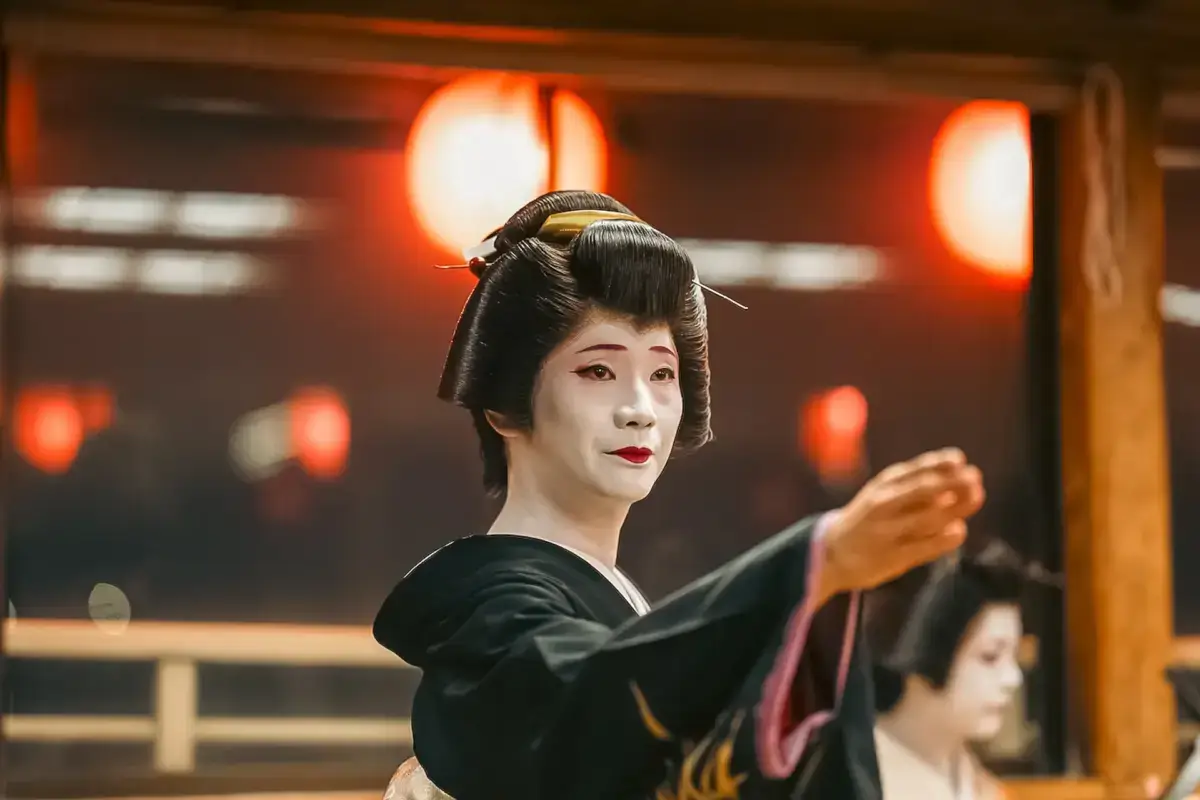
An expectant hush falls over the audience as the geisha named Eitaro steps forward and begins to dance. Each of Eitaro’s movements is deliberate, every gesture precise, with the elegant sway of the fan and the measured footsteps moving in a graceful rhythm. Another geisha plays the shamisen, a traditional three-stringed instrument, deftly plucking the strings in harmony with the dance. Seated nearby, a younger geisha observes them intently, soaking in the performances of her more experienced geisha onēsan (“older sisters”).
Eitaro begins to dance | Photo by Merci
Discovering Geisha Culture
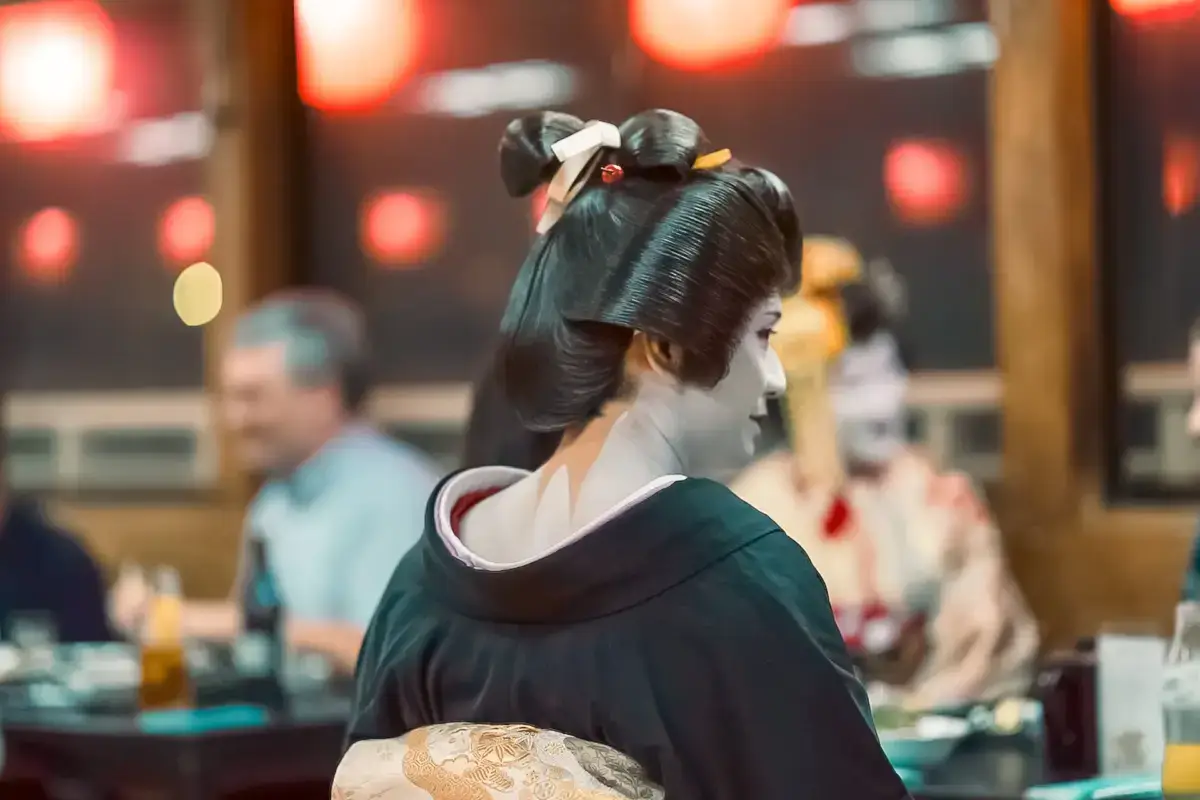
Every geisha’s story is one of countless hours of practice and dedication to an art form that dates back to the 17th century. Eitaro, however, holds a unique position as Japan’s only onnagata—a male performer who dresses in female costume. He’s the second-generation proprietor of Matsunoya, a geisha house located near Omorikaigan Station in Tokyo. Once a bustling entertainment district during the Meiji period (1868-1912), there are now only about ten geisha and four remaining geisha houses in the area.
Raised in the Matsunoya geisha house, where his mother was the proprietor, Eitaro started learning the geisha arts while still in elementary school. After his mother passed away at a relatively young age, he was determined to carry on her legacy. While Eitaro identifies as male in everyday life, he performs professionally as an onnagata, adding his own perspective to this traditional art form.
Eitaro enjoying a conversation with guests | Photo by Merci
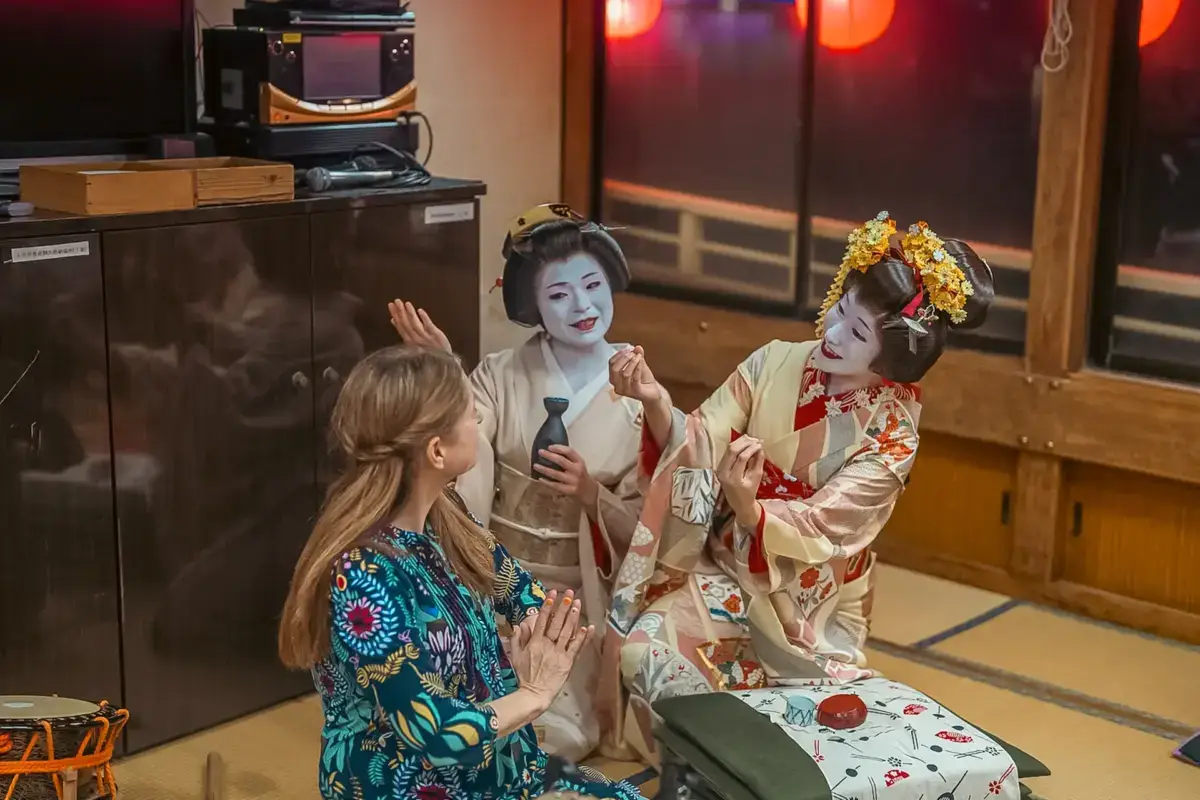
This particular performance took place on a yakatabune, a traditional style of boat that used to transport guests on river excursions. Our group had wonderful views of Tokyo’s glittering nightscape while enjoying the company of Eitaro and the other geisha from Matsunoya. In between dancing, singing and traditional drinking games, the geisha moved with graceful ease among the audience, graciously answering our questions and posing for photos.
Playing traditional games with the younger geisha | Photo by Merci
The word geisha translates as “art person,” reflecting the geisha’s considerable skill in singing, dancing, performing the tea ceremony and playing instruments such as the shamisen—all the while dressed in exquisite kimono. Traditionally, the main role of the geisha was to create an entertaining and relaxing environment for wealthy clients, and their world was closed to most people, Japanese and international visitors alike. In recent years, however, some geisha, such as Eitaro, are helping to bring this storied culture to wider audiences.
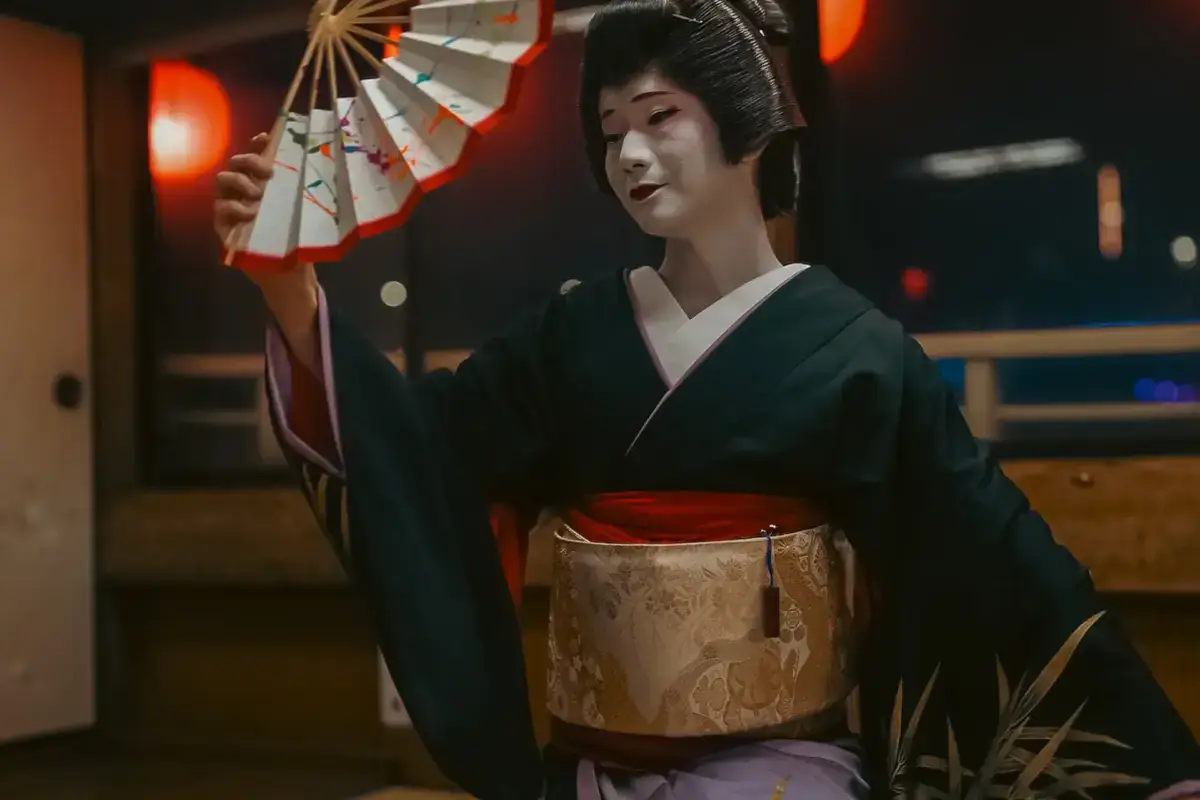
Eitaro dancing with a fan decorated with the dodo zome technique| Photo by Merci
Creativity Blossoms in Ota Ward
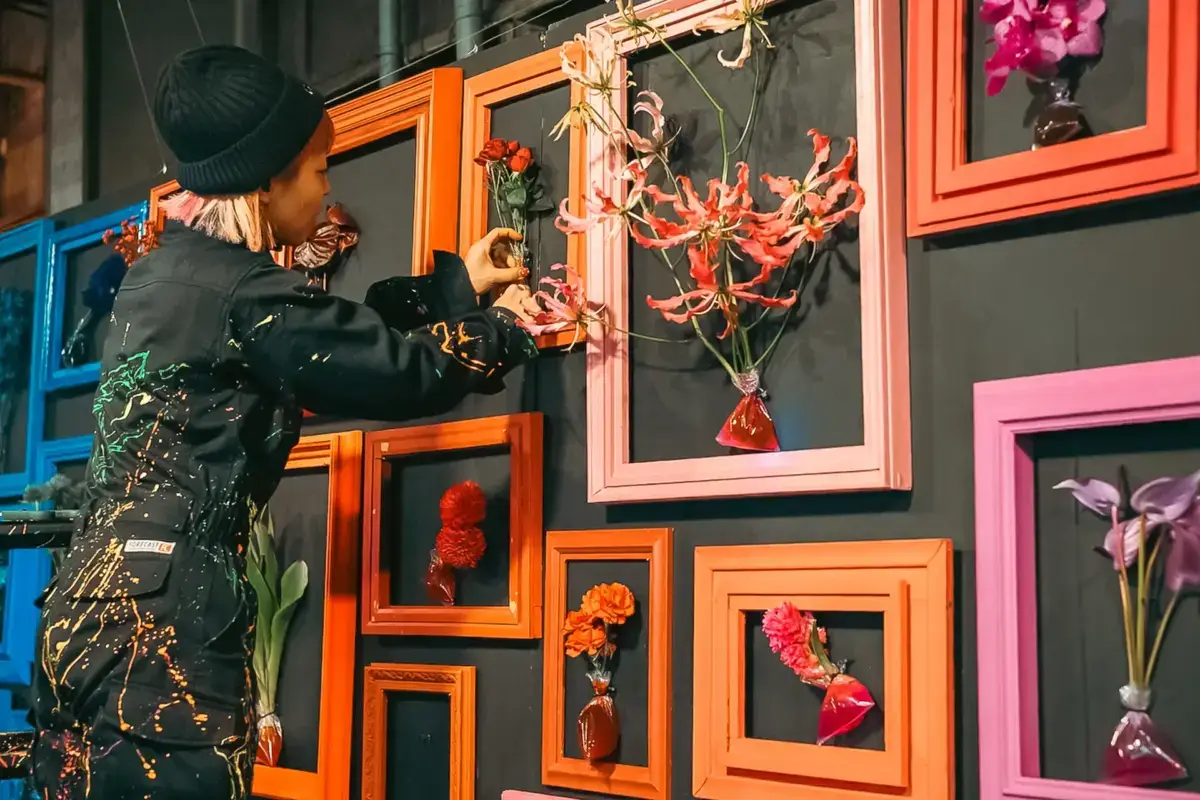
Ota Ward is home to Ota Market, Asia’s largest flower and vegetable market, as well as to Dodotokyo, a group of floral artists who are based there. As part of Eitaro’s efforts to promote local geisha culture, he performs using paper fans and lanterns decorated with dodo zome (“dodo dyeing”)—an art technique that originated with Dodotokyo. Our group had the opportunity to visit their studio to experience dodo zome for ourselves and to hear more about the story behind it.
Dodotokyo’s studio is on Keihinjima, an artificial island located between Haneda Airport and Ota Market. Keihinjima was once home to numerous workshops and factories that drove Japan’s industrial growth and modernization. Recently, however, a growing number of waste disposal companies have sprung up, and Keihinjima is now often referred to as “Garbage Island.”
One of Dodotokyo’s floral artists at work in their Keihinjima studio | Photo by Dodotokyo
To counter this, Dodotokyo’s floral artists want to help transform Keihinjima into an “island of flowers and art” at their studio, where they produce evocative artwork using florals purchased at Ota Market. Their creations emphasize sustainability, often incorporating upcycled materials, and they make stunning bespoke pieces for weddings, corporate events and other special occasions.
Dodotokyo also take pride in helping to preserve traditional culture while incorporating innovative designs into their creations. During our visit to the studio, we had the chance to decorate our own shimenawa takarabune (“treasure ships”), good-luck charms crafted from 100% domestically-produced straw, which we adorned with flowers and other materials. These decorative miniature ships are popular as gifts for people celebrating one of life’s milestones. We also had fun trying out the dodo zome technique, using brushes and disposable chopsticks to apply paint and create patterns on paper fans, similar to those showcased by Eitaro in his performances.
One of the pieces from a workshop to create original shimenawa takarabune | Photo by Dodotokyo
On a Wing and a Prayer
Of course, Ota Ward isn’t just a great place to experience culture and art; it’s also home to one of Tokyo’s most important facilities—Haneda Airport. However, relatively few people know there is a beautiful shrine very close by, where you can pray for safety before taking to the skies!
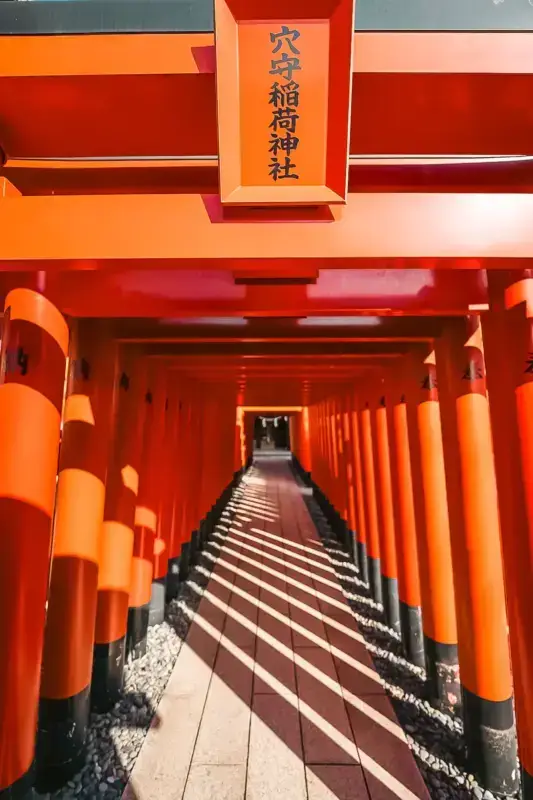
The stunning torii gates of Anamori Inari Shrine | Photo by Merci
The highly photogenic Anamori Inari Shrine features a series of red torii gates and is dedicated to the Inari fox gods, which is why you’ll see the cunning little animals’ motifs all over the complex. Our group was fortunate to have a tour with one of the priests, who explained the significance of each part of the shrine, including the secret spots that we might have otherwise overlooked.
No trip to Ota Ward would be complete without a look behind the scenes at Haneda Airport, and our visit to the JAL Sky Museum offered a fascinating peek into the world of aviation. The museum allowed us to explore archives about the history of Japan Airlines, while the interactive displays helped us imagine what life is like in the skies. We even had a chance to dress up as pilots and cabin crew for fun photo opportunities.
Past uniforms on display at the JAL SKY MUSEUM | Photo by Merci
Then it was on to a specially arranged guided tour of the maintenance and inspection hangar, with one of JAL’s staff members as our genial navigator. Even for frequent fliers, there is no denying that there is something exciting about being close to a huge airplane! Seeing these planes up close and observing the maintenance work is an impressive experience for all ages. The visit to the JAL Sky Museum was a great way to see a different side of the airline industry, adding to our fun-filled day out in Ota Ward.
Seeing a different side of Haneda Airport during the hanger visit | Photo by Merci
Booking Your Tour
To book this special tour, simply click on the link to TRICOLAGE. You’ll be directed to a dedicated page with a contact form, where you’ll be asked for your desired dates and other necessary booking information. As this is a customized tour, you’ll be asked to submit several date options. We’ll confirm availability and get back to you with final details of your tour.
Capturing a rare chance to get up close with an airplane | Photo by Merc
* Please note that aircraft is not always stationed in the hanger.