


Autumn in Japan softens the landscape into a spectrum of amber and smoke-blue, a season built for noticing small things: the hush before a temple bell, the ripple of wind across cedar, the moment light changes a room. In this season, art is not only observed, it is encountered. Beyond the familiar pilgrimage to shrines and maple-lined gardens, Japan’s most stirring experiences often unfold where art and nature are allowed to converse freely.
While much of Europe shelters masterpieces within formal institutions, in Japan art is protected within life itself, threaded through forests and islands, carried by water and wind, and built into spaces designed to breathe with the seasons. That is why we design journeys that travel more slowly and look more deeply, guiding you from the pine forests of Yamanashi to the sea-swept islands of Setouchi, and into Tokyo’s luminous digital worlds. Across these places, tradition and innovation are not opposites but partners, two hands working on the same vessel.
Yamanashi: Where Mountains Meet Modern Art
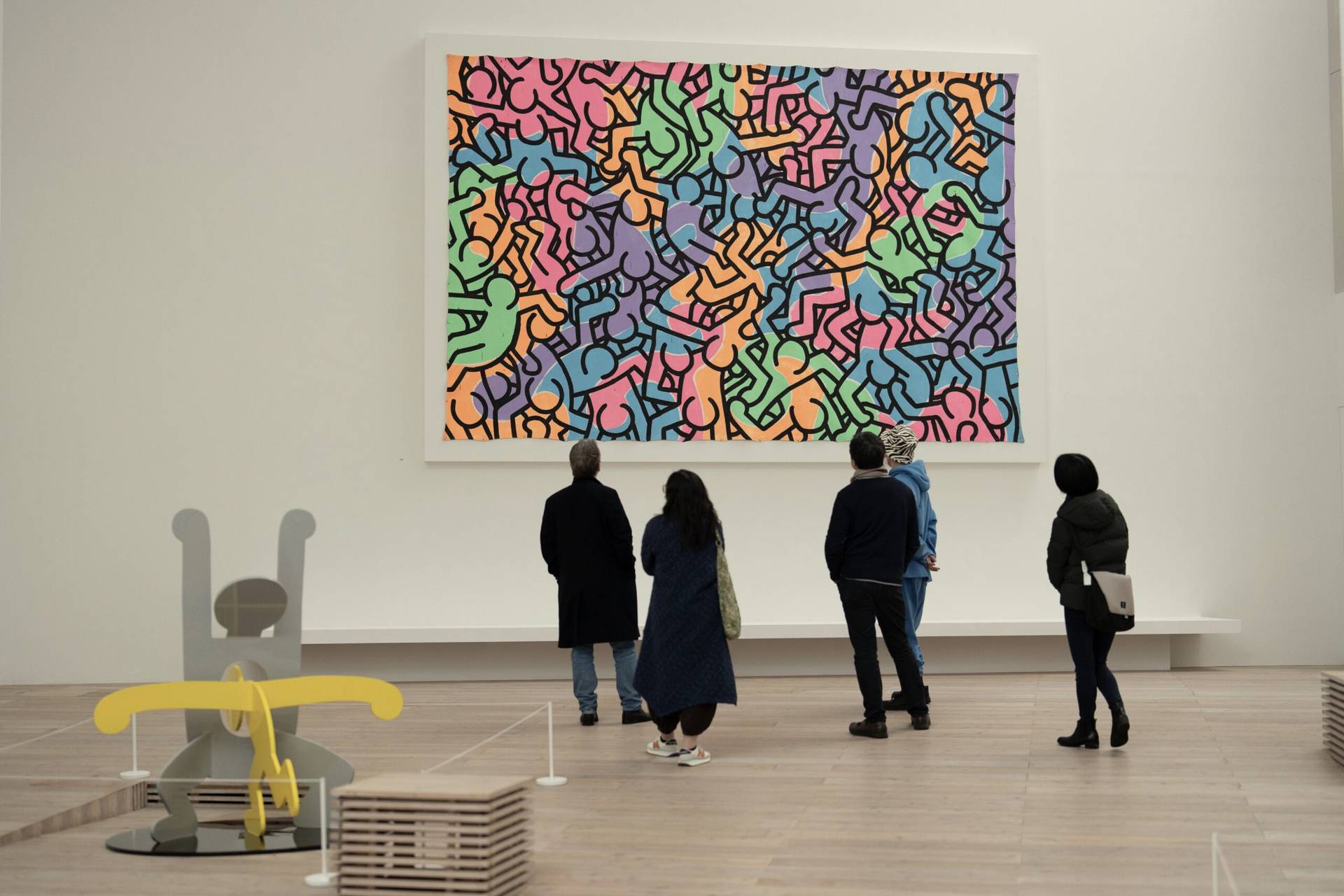
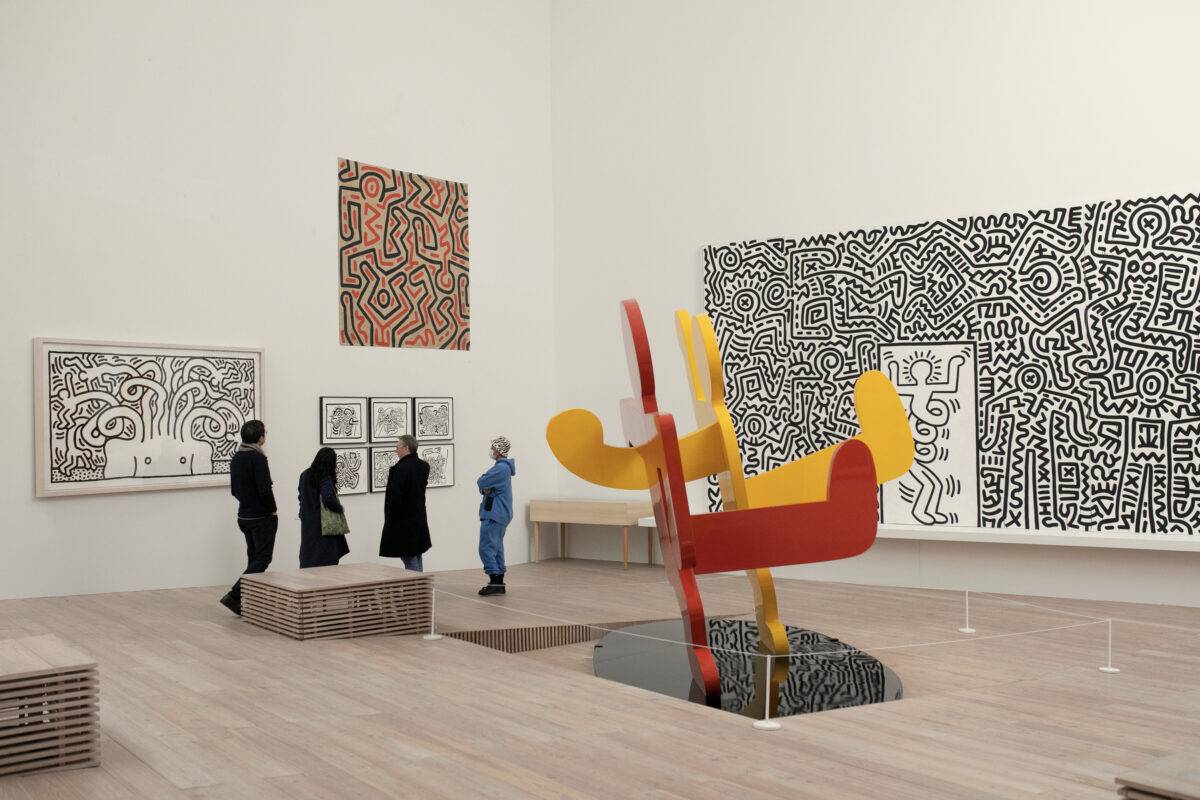
Deep in Hokuto’s pine forests, the Nakamura Keith Haring Collection seems to rise from the earth, a choreography of concrete, glass, and shadow by architect Atsushi Kitagawara. Inside, Haring’s lines pulse: radiant babies, barking dogs, dancers in perpetual motion. Outside, mountain air steadies the rhythm, the pulse of color tempered by stillness.
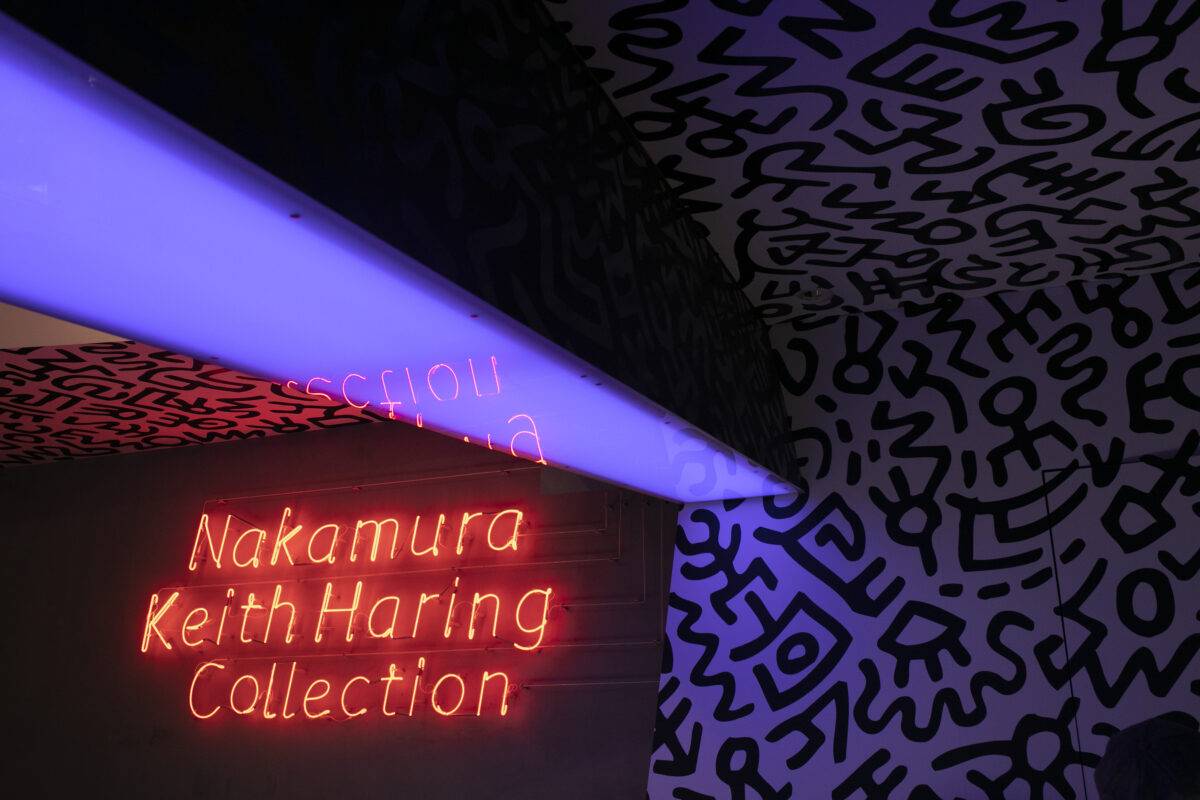
Haring’s purpose was inclusion, art for everyone, in everyday life. Set here, that ideal feels quietly aligned with Japanese sensibilities, empathy, community, and respect for place. For travelers, this region is a gift: a less-visited area where you can move at the speed of your curiosity, threading a museum visit with a vineyard tasting or an overnight stay in a ryokan around Kobuchizawa.
Naoshima & the Setouchi Triennale: Islands of Regeneration
Sail into the Seto Inland Sea and you enter a lesson in regeneration. On Naoshima, Yayoi Kusama’s seaside pumpkin glows like a beacon, while Tadao Ando’s museums sink into rock and light, concrete softened by salt air. Hop by ferry to neighboring islands and the pattern repeats: art woven into daily life, village lanes doubling as galleries, old schools reborn as installations.
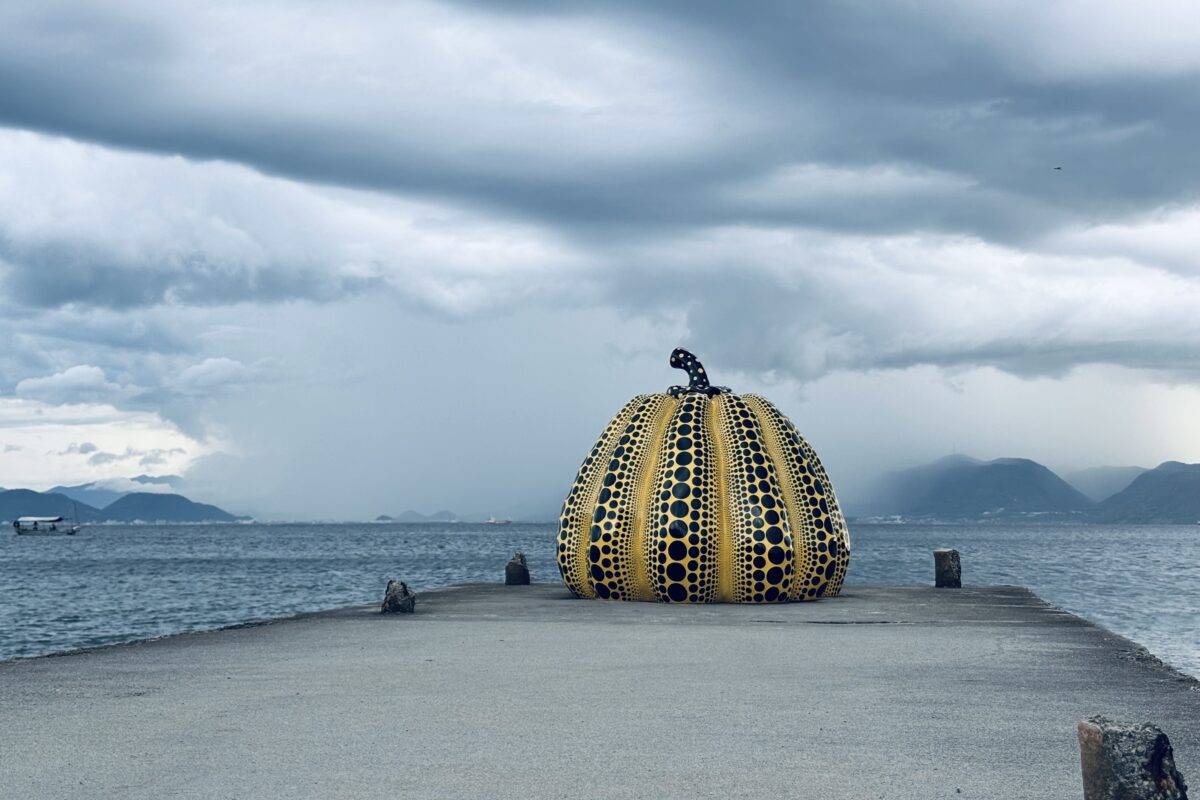
The Setouchi Triennale reframed this archipelago from “quiet and aging” into an open-air cultural landscape, a gentle kind of renaissance where ferries and footpaths define the itinerary. Think of it as a Japanese Mediterranean, where sunlight, sea, and small communities are connected by creativity and care.
Tokyo: teamLab Planets & teamLab Borderless
Back in Tokyo, the conversation continues at a different tempo. teamLab Planets invites barefoot immersion, water shallow underfoot, mirror corridors stretching into infinity. teamLab Borderless erases routes: rooms change, images drift across boundaries, and you navigate by feeling rather than map. Here, technology is not an escape from nature but a continuation of it.
In one of teamLab’s most poetic installations, waves of digital flowers bloom and fade around the viewer’s steps, recalling the spirit of Edo-period masterpieces such as the Irises screens by Ogata Kōrin. The composition, color, and rhythm of motion recall the same dialogue between water and petals, but transposed into light and code. What was once painted gold now glows, what was fixed on silk now breathes and disappears. This continuity is distinctly Japanese, a visual conversation across centuries where the essence of nature remains unchanged even as the medium evolves.
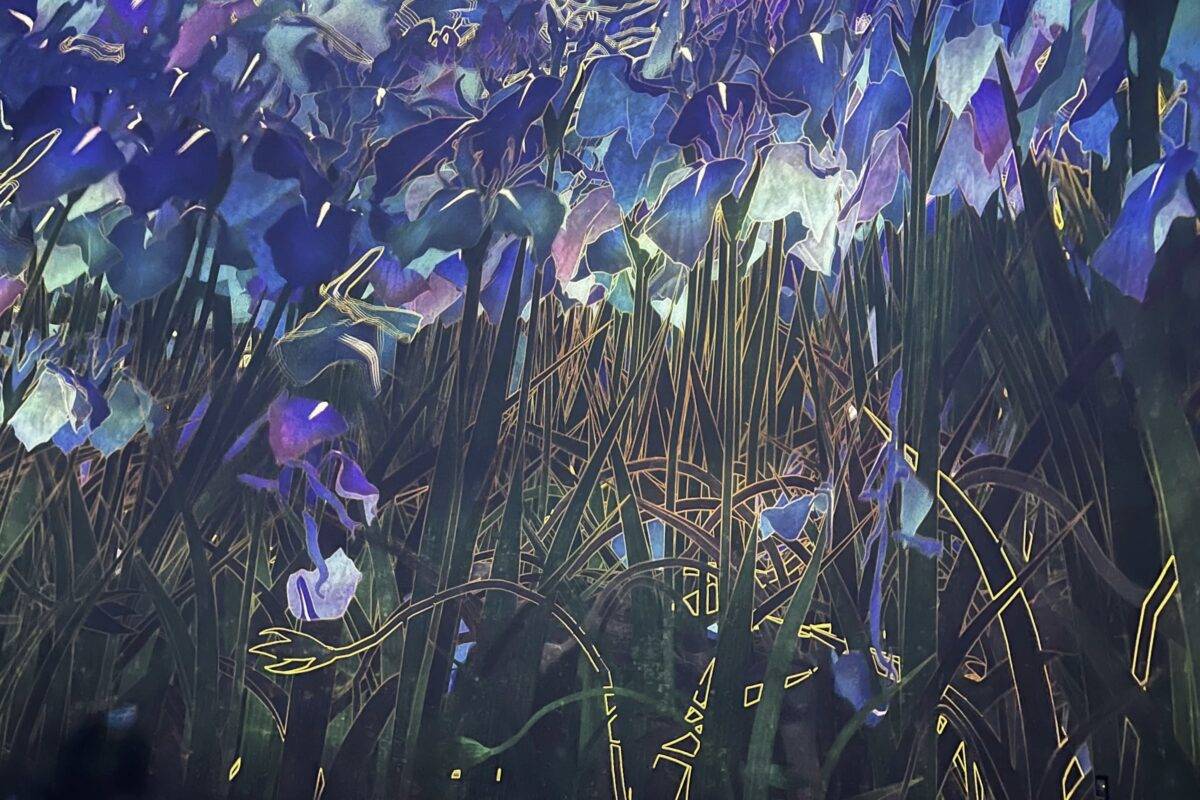
These blossoms and currents of light recall Edo irises and painted waves, re-coded for the present. The themes are ancient, impermanence, harmony, and the space between, yet the medium listens and responds. As you move, the work moves with you.
From Edo to Algorithm: The Japanese Essence of Art
Japanese aesthetics have long treated nature not as background but as collaborator. Edo-period (1603–1868, Japan’s era of artistic and cultural flourishing) screens shimmered with irises, waves, and gold leaf skies, tea gardens composed silence and ma 間, the meaningful interval. The unifying thread is a sensitivity to impermanence 無常 (mujō / むじょう) and harmony 和 (wa / わ). Contemporary creators echo the same lexicon with new tools.
Across Tokyo, traces of Edo elegance still shape today’s creative language. From painted screens of irises to immersive floral worlds by teamLab, the same elements, water, light, and flowers, continue their dialogue through new mediums. Algorithms and glass now speak where brush and silk once did.
-In Japan, modernity does not erase tradition, it evolves from it.
https://bunka.nii.ac.jp/heritages/detail/145427
“Irises,” Edo period, early 18th century
Connecting the Dots: Japan’s Regenerative Art Map
Across the country, three distinct expressions of creativity emerge, each shaped by its landscape and rhythm. In the forests of Hokuto, art unfolds in stillness, where light filters through cedar branches and color meets silence. Across the Seto Inland Sea, creativity takes the form of openness, stretching across sea and sky, where art regenerates forgotten places and connects communities once separated by tide. In the capital, it transforms into motion, a pulse of light and technology that reinterprets tradition for the modern world.
Together, these destinations trace a regenerative circuit, a journey where culture, innovation, and environment coexist. Experiencing all three offers a deeper understanding of how Japan continues to reinvent itself without losing its essence.
Traveling this circuit responsibly means slowing your pace. Choose mid-week or shoulder-season visits, when the air and spaces are quieter. Move with intention, take trains through the countryside, ferries across the inland sea, and your own two feet through city streets. Stay longer in fewer places, and let local ryokans, guesthouses, and cafés become part of your discovery. In doing so, you don’t just see Japan’s creativity, you help sustain the ecosystems, artisans, and families that keep it alive.
Art in Japan is inseparable from place. It arrives as the cool of concrete, the brine on wind, the hush between footfalls, the bloom of pixels in the dark. Whether carved into Ando’s shadows, pulsing through teamLab’s rooms, or glowing inside a forest corridor, each encounter invites the same question: how do we connect, with nature, with others, with time? The answer, if there is one, is not a statement but a rhythm you carry out with you.
That’s why at Tricolage, we curate journeys that go beyond observation. We guide travelers into experiences that regenerate both person and place, where hidden doesn’t mean hard to reach, but easier to hear. From still forests to sea light and luminous museums, we map a quieter creative pulse, innovation grown from tradition, travel that gives back as much as it takes in.
As the seasons shift, autumn deepens each encounter. In the mountains, the museum façade catches the burnished tones of the surrounding hills; across the inland sea, the late sun spreads a silver sheen across the calm water; and in the city, the fading light lingers over mirrored rooms, stretching every reflection into something almost eternal. The air itself feels more deliberate, a reminder that beauty here is not a spectacle, but a rhythm to be met slowly.
If you’re ready to explore Japan as a living dialogue between light and shadow, tide and time, we’ll walk that line with you.