


The word “sustainable” is by no means just a modern trend. In Japan, this mindset has been deeply rooted since ancient times, expressed through various cultural practices and vocabulary.
For centuries, Japan has cherished the word mottainai. Originating from Buddhist terminology, it conveys a sense of regret when the inherent value of an object is wasted or lost. This cultural concept stems from a deep-seated spirit of respect and gratitude toward objects—a belief that we should care for things until they completely lose their physical form. Today, it has transcended borders, becoming the global environmental slogan “MOTTAINAI.”
This ethos was vividly alive during the Edo period (1603–1867). Under a policy of national isolation (sakoku), Japan operated as a “perfectionist circular society” that entirely recycled its limited resources within the country. Waste and organic matter were repurposed as fertilizer for agricultural villages, maintaining a delicate nutritional balance between urban and rural areas while producing virtually zero waste.
It is upon this very spiritual foundation that the bedrock of Japan’s circular society was formed—a lifestyle centered around crafting items with care, using them thoroughly, and breathing new life into them as something else entirely.
In this article, we invite you to explore Japan’s spirit of mottainai and its modern circular economy through our encounters in the Setouchi region. Let us unpack the roots of Japanese spirituality and culture uncovered during this journey.
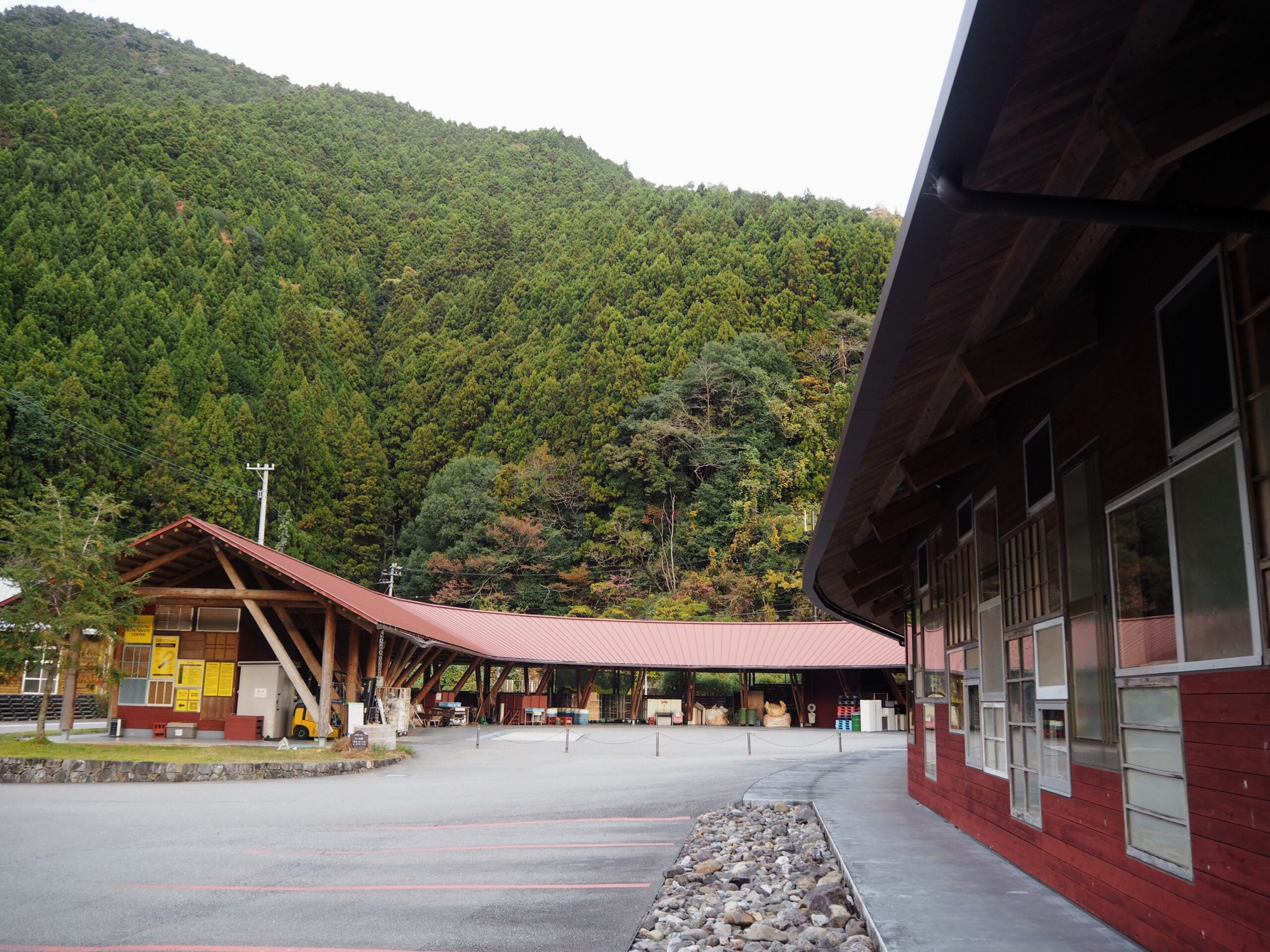
Kamikatsu, a small town in Tokushima Prefecture, is internationally renowned today as a pioneering “Zero-Waste Town.” However, this initiative did not begin as a marketing campaign for tourism or regional branding.
About 30 years ago, Kamikatsu—with a population of roughly 1,300—faced a severe crisis because it could not manage its own waste disposal. Driven by a desire to protect their community’s pristine lifestyle, the residents sought a system tailored to their daily lives. The result was today’s rigorous sorting system, where residents bring their waste to a central station and separate it themselves. Starting with 35 categories in 2001, the system now requires sorting into 43 distinct categories, achieving an astonishing recycling rate of approximately 80%.
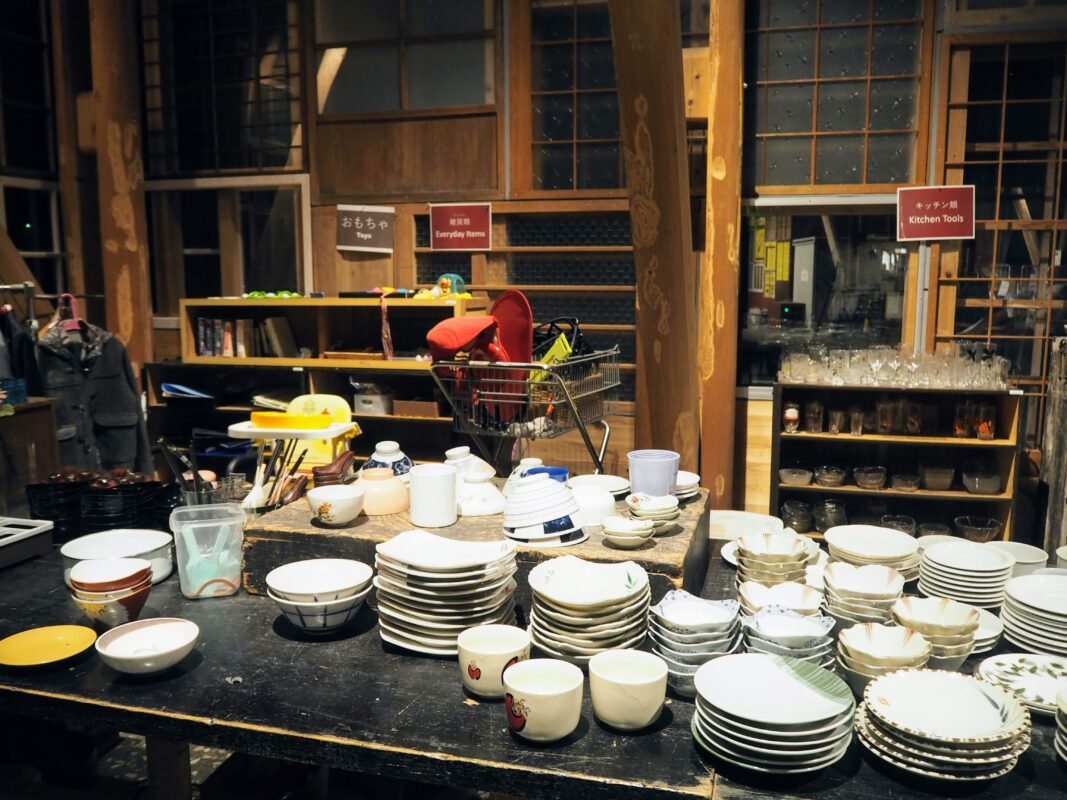
Kamikatsu’s waste station is far more than a trash dump; it serves as a vital community hub where locals cross paths, chat, and connect. The town has even implemented a system where sorting paper earns points that can be used as a local currency, exchangeable for items like school gym uniforms.
The defining characteristic of Kamikatsu’s zero-waste journey is that it did not spring from an abstract environmental ideology. Instead, it was born out of a practical, ground-up search for survival, with the “Zero-Waste” label defined only after the fact.
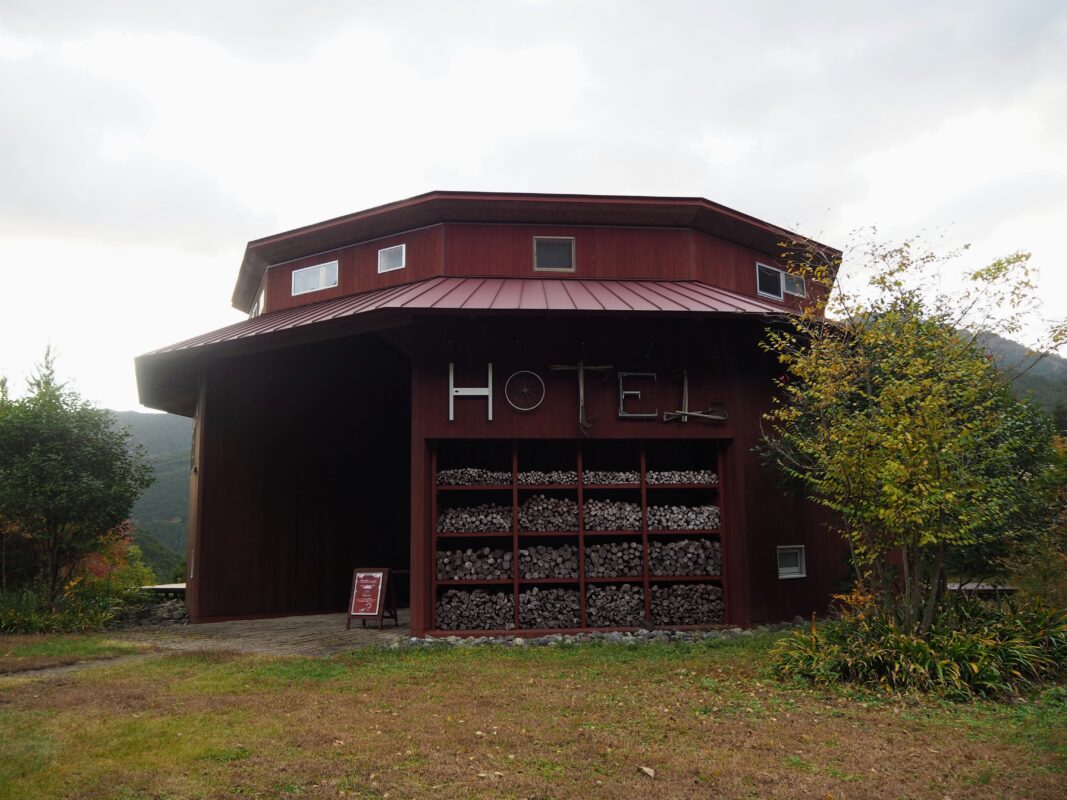
At the zero-waste action hotel, aptly named “Hotel WHY,” visitors can experience this lifestyle firsthand. Staying there taught me a profound lesson: zero-waste is not a painful set of restrictive rules, but a practice that enriches our lives.
As residents continuously find ways to reduce waste, their purchasing standards and relationship with material goods naturally evolve, leading to a much simpler lifestyle. They begin choosing products based on how easy they are to sort and recycle, naturally cutting out unnecessary purchases. This is not merely environmental consciousness; it is a profound re-evaluation of how one lives.
Guests staying at “WHY” engage with these various zero-waste initiatives, sparking a shift in perspective similar to that of the locals. The facility is not a mere tourist attraction; it is intentionally designed as a space for social education, prompting us to ask: Why is waste generated in the first place? and How else can we choose to live? At the same time, the sleek architectural design, exceptional meals, and thoughtful hospitality ensure that the experience feels like an enjoyable adventure rather than an exercise in sacrifice.
Kamikatsu is home to many people who have spent their lives harmonizing with nature, naturally solving everyday challenges through their own hands, wisdom, and resourcefulness. This intimate relationship with the land has shaped a unique landscape and culture, defined by terraced rice paddies, natural forests, and traditional dyeing crafts.
In the local Tokushima dialect, there is a phrase: arumonde. Beyond its literal meaning of “using what is available,” it captures a deeper approach to life—the practice of revitalizing the resources immediately around us through wisdom and imagination.
We caught a glimpse of this local philosophy during a crafting workshop at the Kanda Atelier, run by the local brand “Sugitoyama.” The atelier hosts various workshops utilizing Kamikatsu’s natural materials, including botanical dyeing with locally foraged plants, making tassels from indigo-dyed wood-thread (moku-ito) derived from local cedar trees, and traditional Tokushima indigo-dyeing experiences available from August to October.
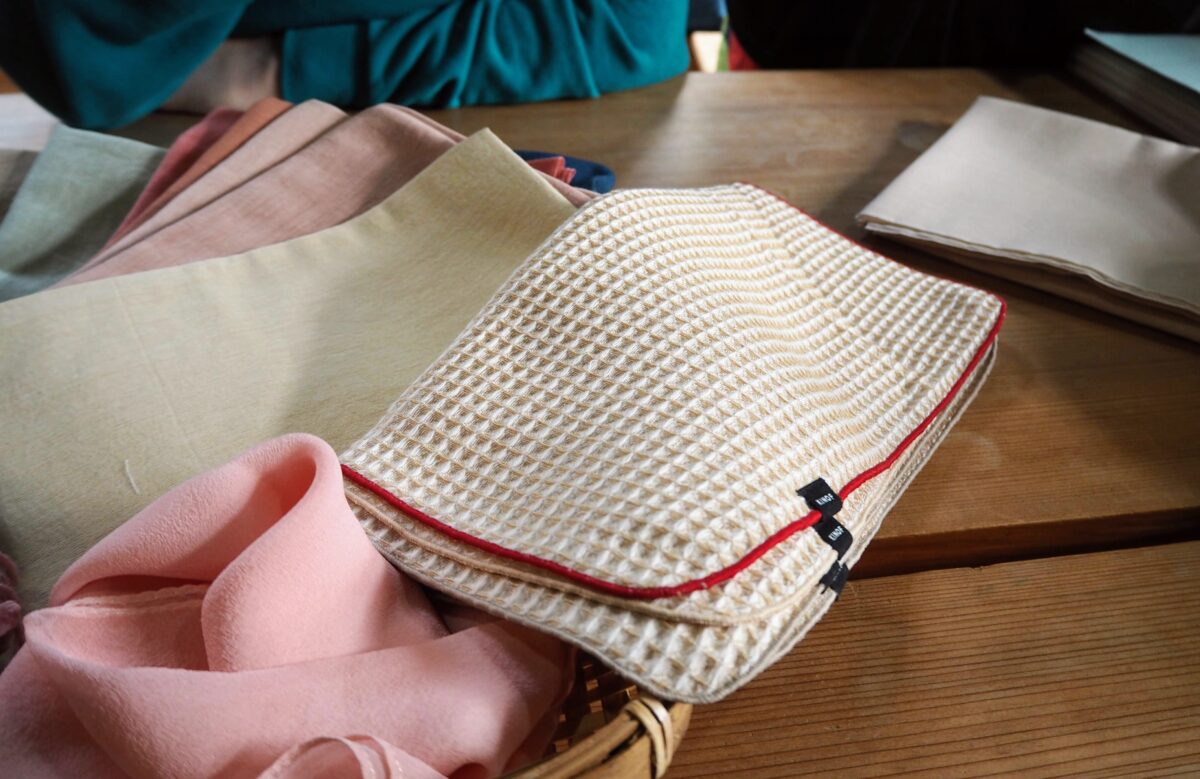
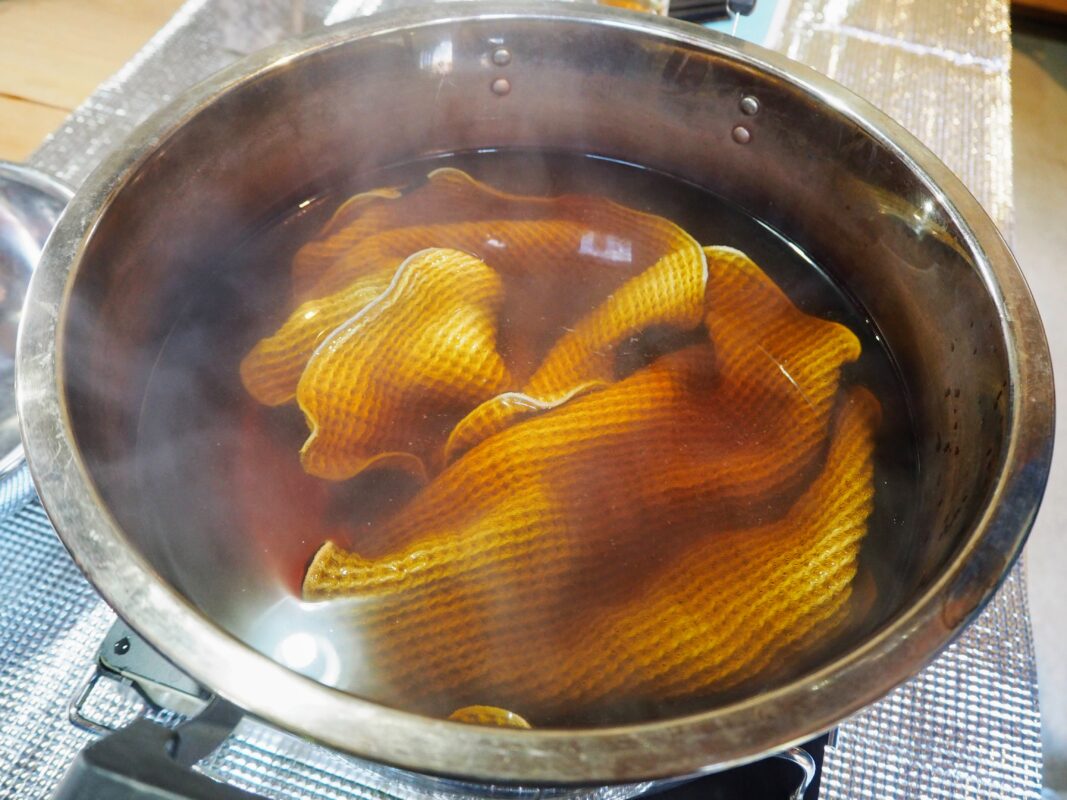
During our visit, we participated in a natural botanical dyeing workshop using kihada (Amur corktree) gathered in the town. For our canvas, we used a hand towel made of “KINOF” fabric—a Sugitoyama original brand of textiles woven from Kamikatsu cedar wood-thread. After simmering the fabric in a dye extracted from the tree’s bark, rinsing it in pristine local water, and letting it dry, we were left with a beautifully warm, yellow hand towel that blended seamlessly with Kamikatsu’s natural palette.
This experience made me realize that we don’t always need to rely on imported products from supermarkets; the plants in our own backyards hold the potential to create the everyday items and food we need. It opened my eyes to how a hyper-local economy—creating and consuming within the community using arumonde—can fundamentally enrich our lives.
Kagawa Prefecture boasts the highest consumption of udon noodles in Japan, making it a must-visit destination for travelers looking to indulge in the local food culture. However, behind this popularity lies a harsh reality: an estimated 3,000 to 6,000 tons of udon are wasted annually by factories and restaurants.
In response, Kagawa launched the “Whole Udon Circular Project,” driven by the familiar rallying cry of mottainai. This initiative transforms leftover udon and manufacturing scraps into valuable resources, creating a flawless local loop.
The cycle begins entirely with udon. Food scraps from the manufacturing process are collected and sent to a biogas plant, where they undergo fermentation to generate methane gas. This gas powers a turbine to generate electricity.
Furthermore, the byproduct left over after power generation is transformed into liquid fertilizer. This nutrient-rich fertilizer is then used to cultivate local wheat and scallions. Finally, the harvested wheat is channeled back into making fresh udon noodles. Through this elegant design, a closed-loop system is established: Udon Scraps → Biogas → Electricity → Fertilizer → Wheat & Scallions → New Udon.
The project also seamlessly integrates education and tourism. Local children participate in programs where they plant wheat, harvest it, and mill it into flour, while travelers can join tours that combine hands-on udon-making with a guided visit to the biogas plant.
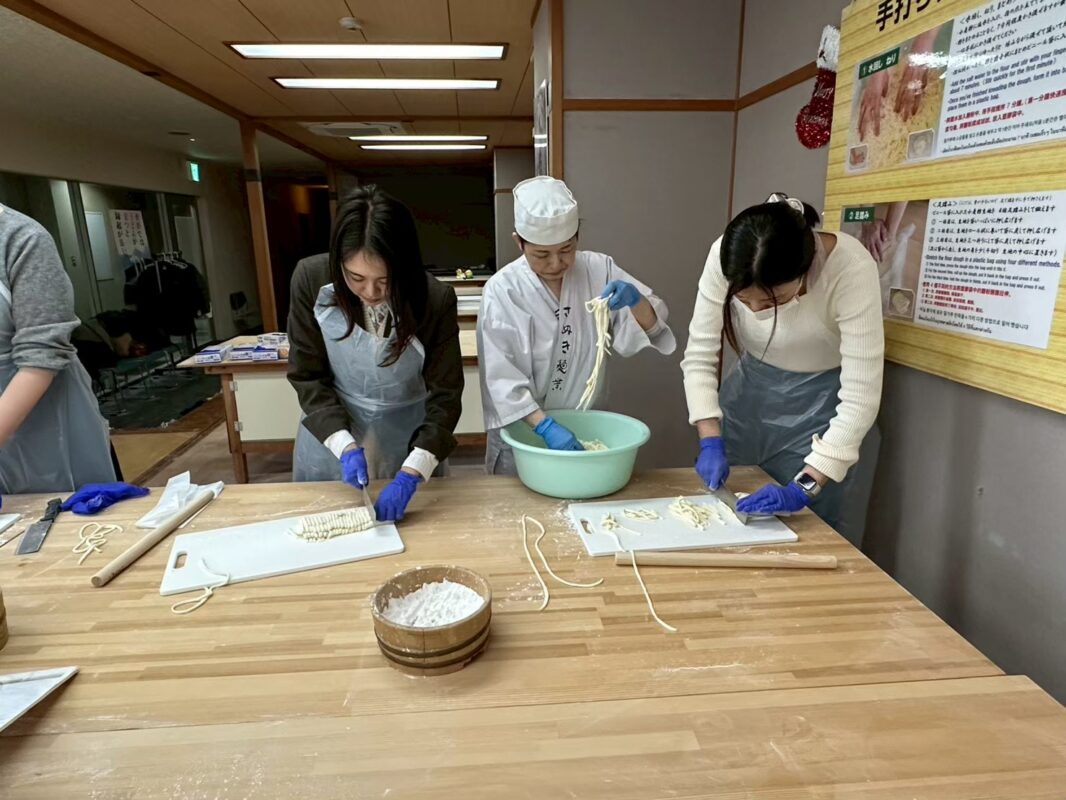
We experienced this firsthand during an udon-making workshop at “Sanuki Mengyo,” which doubles as an introduction to the project. Kneading the dough made me realize just how physically demanding it is to create noodles with that signature chewy texture. When it came to cutting the dough, achieving a uniform width proved incredibly difficult; my rustic, uneven noodles were far from restaurant quality.
This hands-on struggle made it easy to see why so much scrap material is naturally generated during production, and it made me deeply appreciate the necessity of this recycling project.
At the same time, I realized we must not use this system as an excuse to waste food mindlessly just because “it will turn into electricity anyway.” The ultimate responsibility still lies with factories, restaurants, and us as consumers to make every effort to minimize food loss at the source.
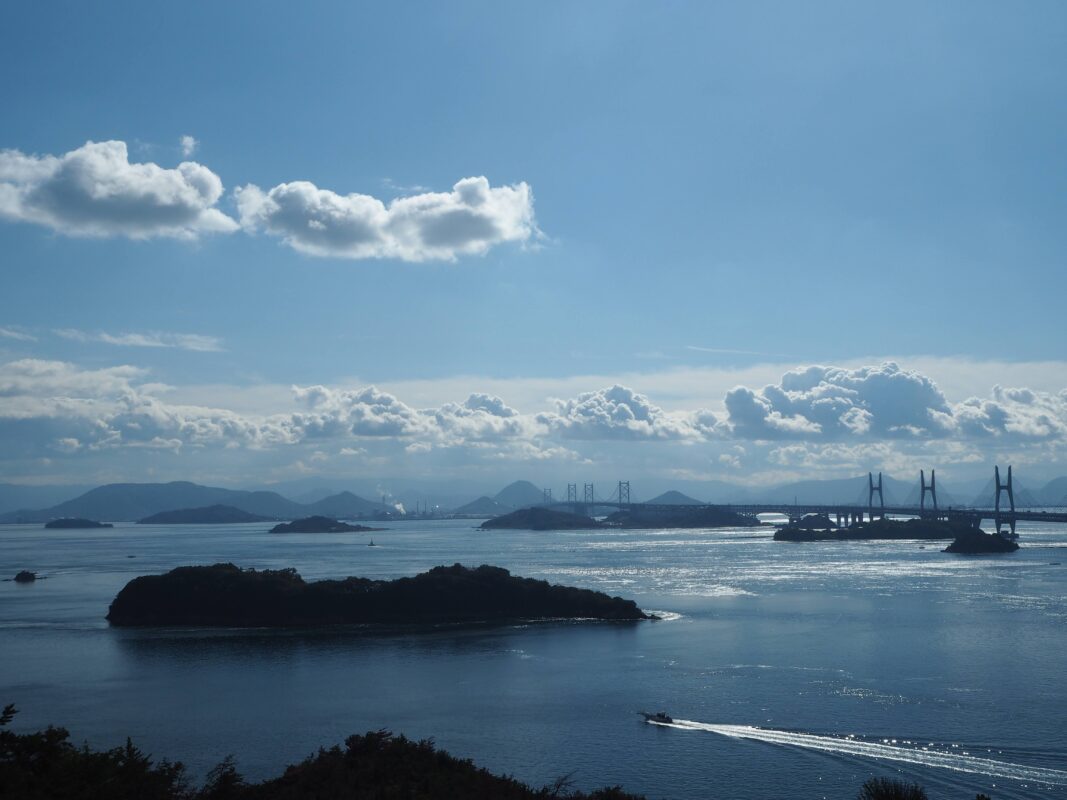
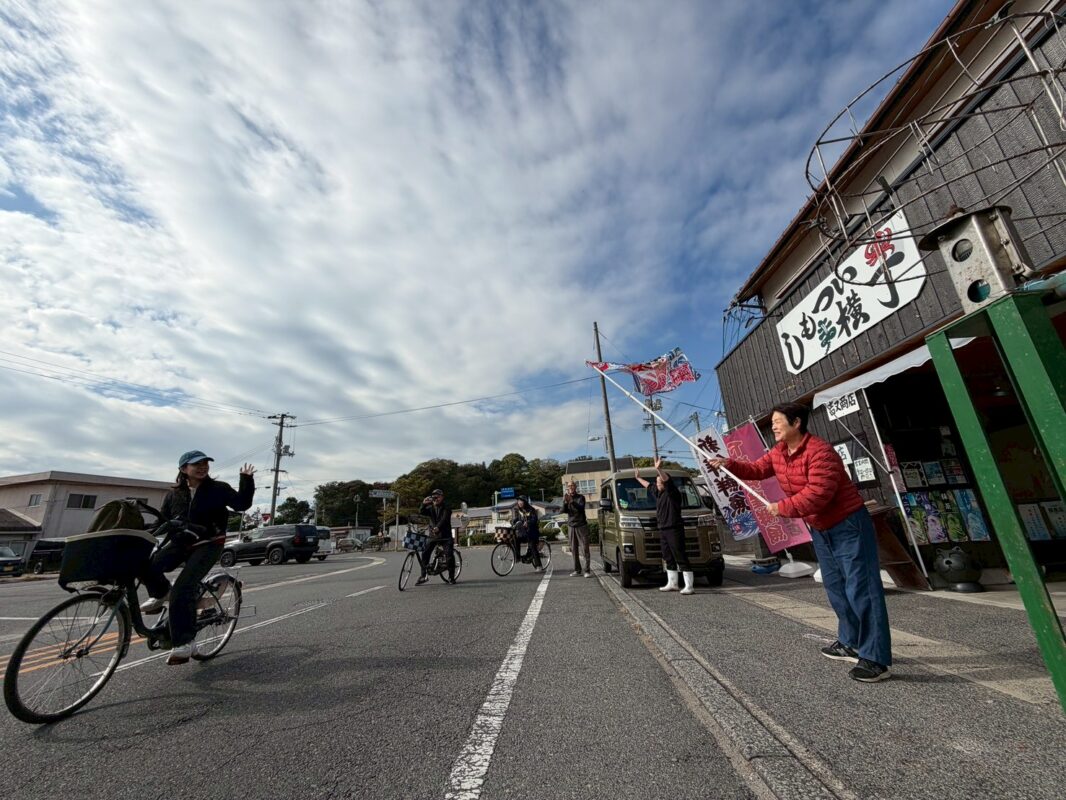
Next, we headed to the fishing port of Shimotsui, located in Kojima in the southern part of Kurashiki City, Okayama Prefecture. Sweeping views of the Seto Inland Sea framed our journey as we cycled along a dedicated bike path converted from an abandoned local railway line.
Faced with a declining population, Shimotsui has seen its community and rich seafood culture face a quiet decline. To protect the local fishing industry and livelihoods, residents have rallied around initiatives focused on local consumption and community exchange.
A prime example is “Shimotsui Yokocho,” a beautifully renovated space originally managed by Yoshimata Shoten, a local seaweed merchant. Today, it functions like a lively market where local fishermen sell water products freshly caught that very morning. Visitors can have their purchased fish filleted on the spot to eat right away. This setup creates a wonderful synergy: producers get to see the immediate reactions of their customers, and consumers can look into the faces of the people who caught their food.
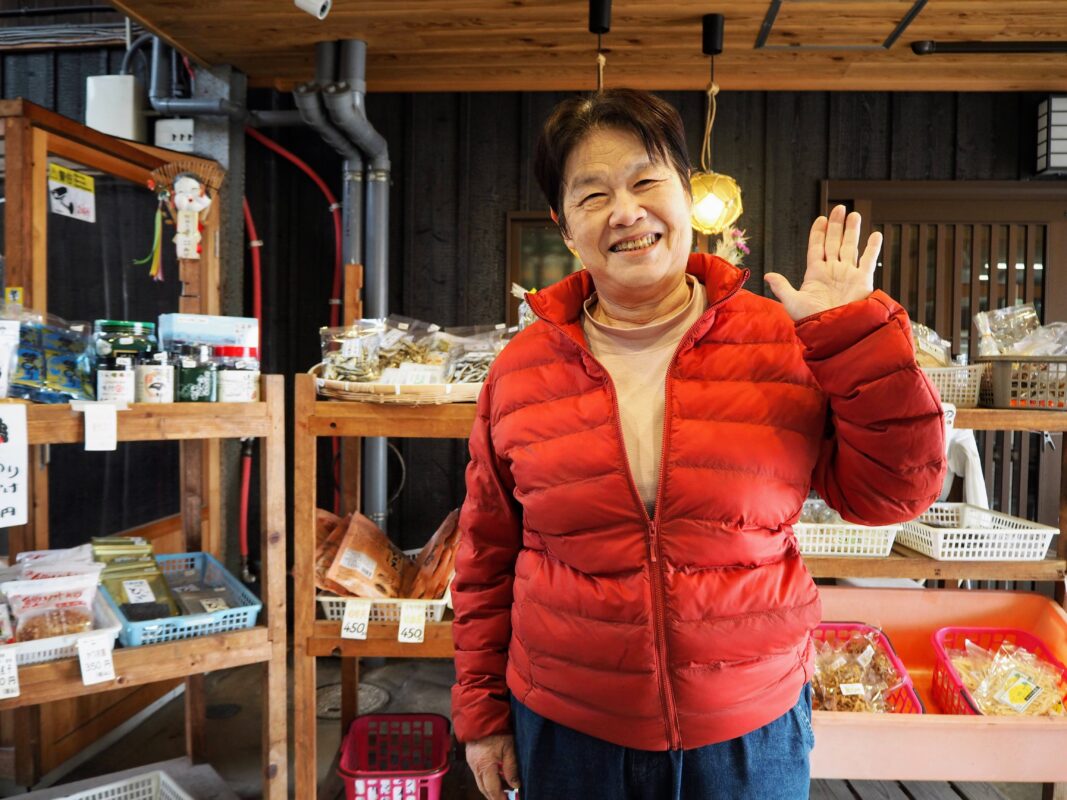
Yoshie Yoden, the passionate owner of Shimotsui Yokocho, introduced us to the region’s environmental efforts. In Shimotsui, fishermen take the lead in ocean conservation to ensure a sustainable supply of seafood. Recognizing that a healthy ocean relies on a healthy mountain, they plant trees and manage the upstream forests, which eventually flushes nutrient-rich water back into the sea.
Their seaweed cultivation also plays a vital role in purifying the water. Seaweed absorbs carbon dioxide and creates a thriving habitat for plankton, which in turn offers food and sanctuary for small fish.
This holistic approach closely mirrors the concept of Satoumi—a coastal ecosystem where gentle, sustainable human intervention actually enhances biological productivity and biodiversity.
Witnessing Shimotsui’s dedication to this marine-mountain connection forced me to reflect on the impact my own daily choices and meals have on the planet. Moreover, experiencing Ms. Yoden’s warm hospitality allowed me to feel the genuine warmth of the locals and the comforting reassurance that comes from connecting directly with food producers.
In the past, the people of Japan naturally lived out the spirit of mottainai within an inherently circular society. Over time, modernization drastically altered our lifestyles and disconnected us from these rhythms.
Yet, this journey proved to me that this ancient ethos is still vibrantly alive in Japan’s regions. Across Kamikatsu, Shimotsui, and Kagawa, the people I met were not acting out of a rigid sense of obligation. Instead, they were driven by a heartfelt desire to protect their neighbors, preserve their hometowns, and genuinely enjoy a rich, meaningful way of life.
The new perspectives we gather while traveling have a way of quietly reshaping our ordinary routines long after we return home. Travel is undoubtedly an enjoyable escape, but its true magic lies in its power to challenge our assumptions and broaden our horizons.
This is precisely the kind of travel Tricolage strives to create—journeys that invite you to slow down, connect deeply with local wisdom, and discover fresh insights that stay with you for a lifetime.