Long before Kyoto or Nara rose to prominence, Asuka was the first capital of Japan, the place where the nation began to take form.
Some landscapes preserve the past in stone, while others let it breathe in the open air.
Asuka belongs to the latter.
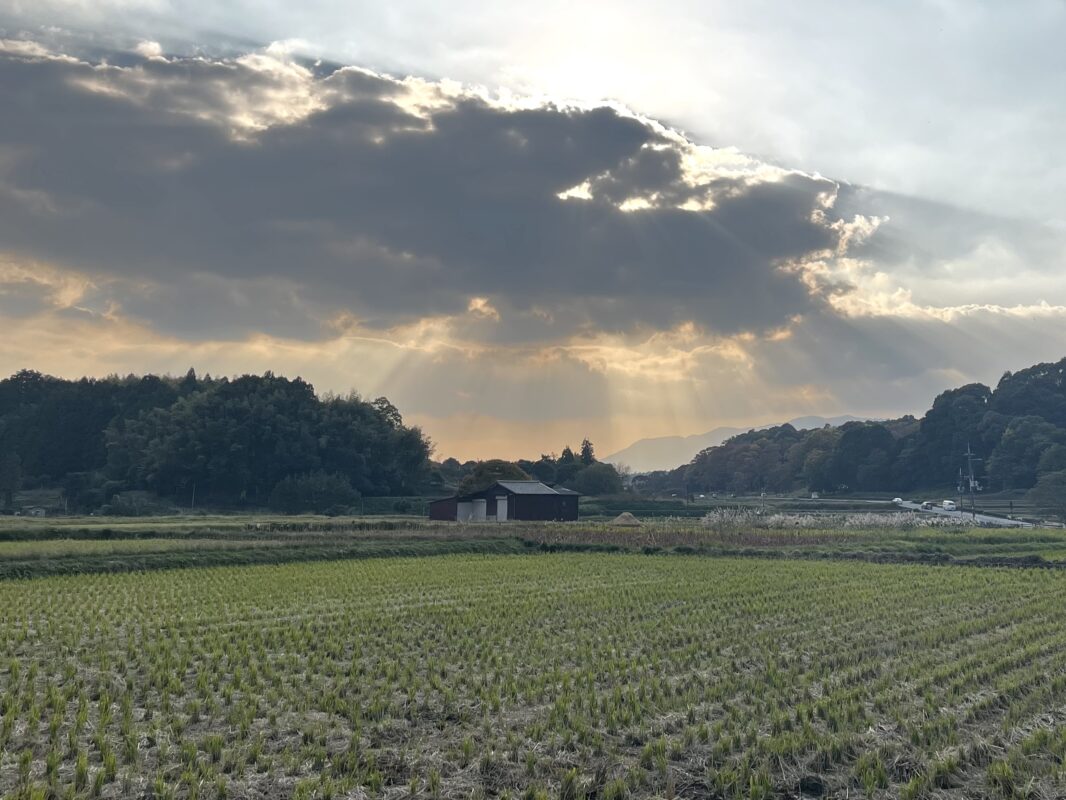
Often described as the cradle of Japanese civilization, once you step into its fields, history becomes tactile. The valley unfolds in shades of gold and green: terraced rice fields lit by the morning sun, rows of autumn persimmons, narrow roads tracing soft curves through hills shaped like the worn pages of an ancient manuscript.
Here, history is not something you visit, it is the ground beneath your feet.
During the Asuka Period (6th–8th century), this quiet landscape hosted the earliest experiments of a nation in formation: diplomacy, Buddhist thought, architecture, legal codes. Yet despite its political weight, Asuka never lost its human scale. Temples, stones, houses, paths, everything remains close to the earth, still interwoven with the rhythms that shaped the beginnings of Japan.
In contemporary Japan, the debate on gender equality remains urgent. Despite the recent election of a female prime minister, women’s representation in political and economic life remains limited, and the country ranks 118th in the Global Gender Gap Index.
Yet ancient Japanese history reveals a more nuanced reality, one in which female authority was neither rare nor marginal.
And no place makes this past more visible than Asuka.
Between the 6th and 7th centuries, as the foundations of the Japanese state emerged, several women ascended the throne, guiding decisive moments in the country’s political and spiritual formation. Their leadership did not overturn patriarchal structures, but it defined crucial turning points in national history.
Their influence survives as atmosphere: in the authority of priestesses, in the continuity of ritual, in the cultural memory preserved by the women who still guide Asuka’s spiritual life.
In Asuka, empowerment is not a modern movement, but an inheritance carried quietly and steadily for over a millennium.
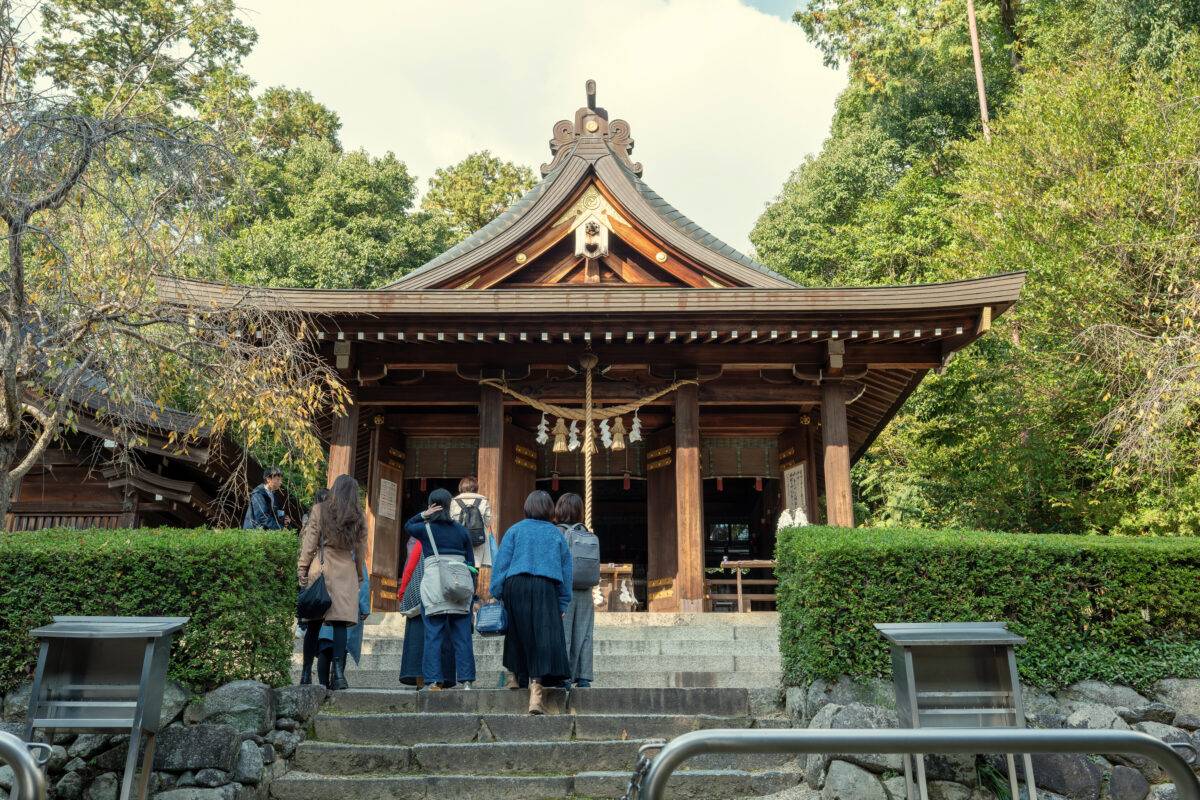
Today, this legacy lives through two extraordinary figures: Ms. Asuka, the kannushi of Asuka Niimasu Shrine, and Ms. Ogitani, the Buddhist monk responsible for Kawaradera, a temple founded by Emperor Tenji, son of the powerful Empress Saimei.
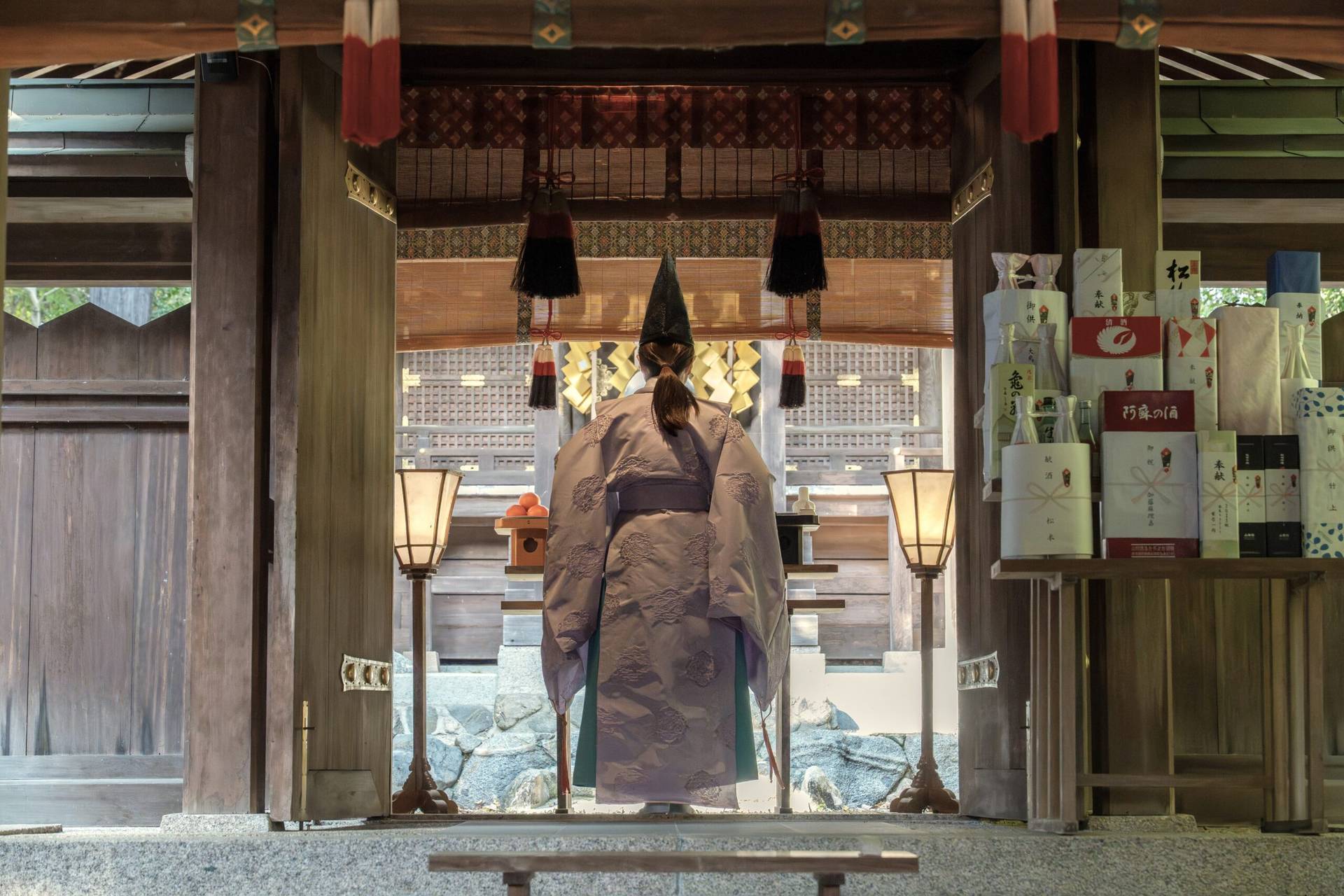
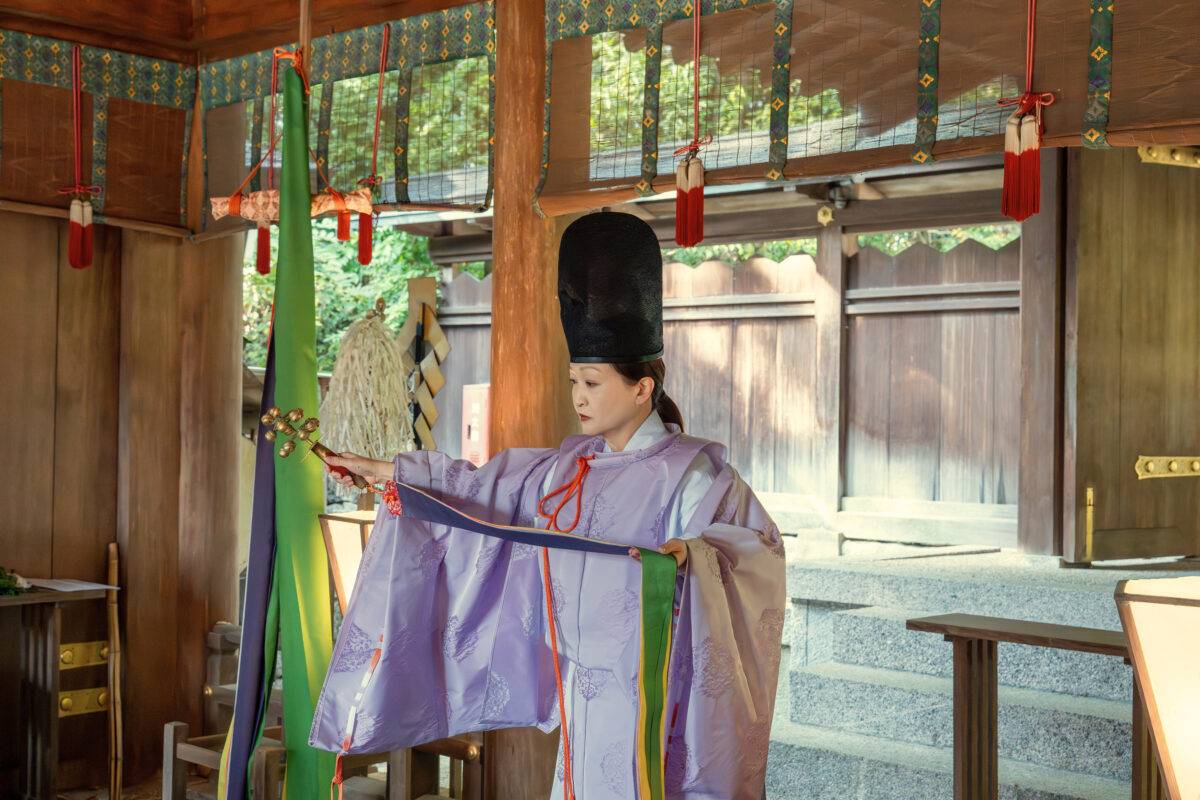
At the Niimasu Shrine, Ms. Asuka, the first woman in the shrine’s 1,200-year history to step into priesthood, embodies an authority rooted in family lineage, years of training, and the belief that spiritual leadership can evolve without breaking.
Soon to become the 88th Guji (Chief Priest), Ms. Asuka treats Shinto not as a doctrine but a relationship: her prayers and ritual chants carry a rare power, guiding listeners toward a deeper dimension of spirituality, where the divine is perceived not as a concept but as an atmosphere.
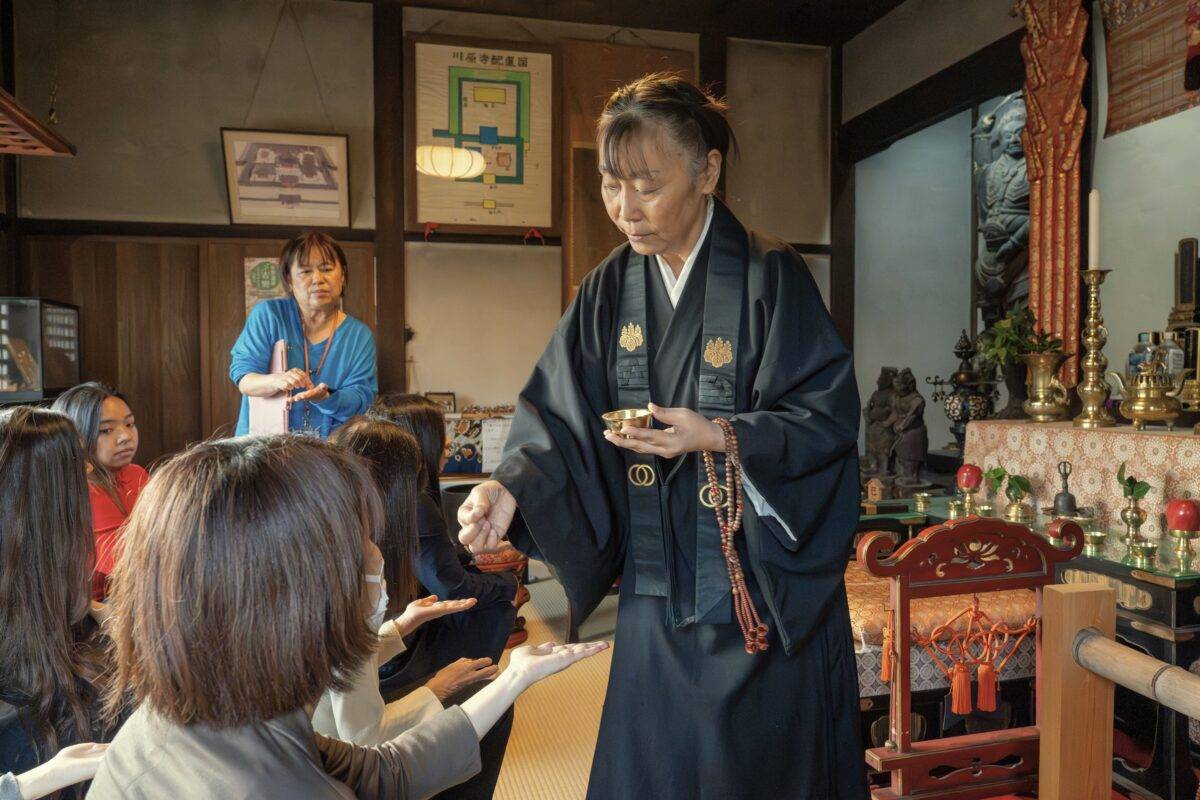
At Kawaradera, the Buddhist monk embodies a different force: composed, disciplined, born of daily practice.
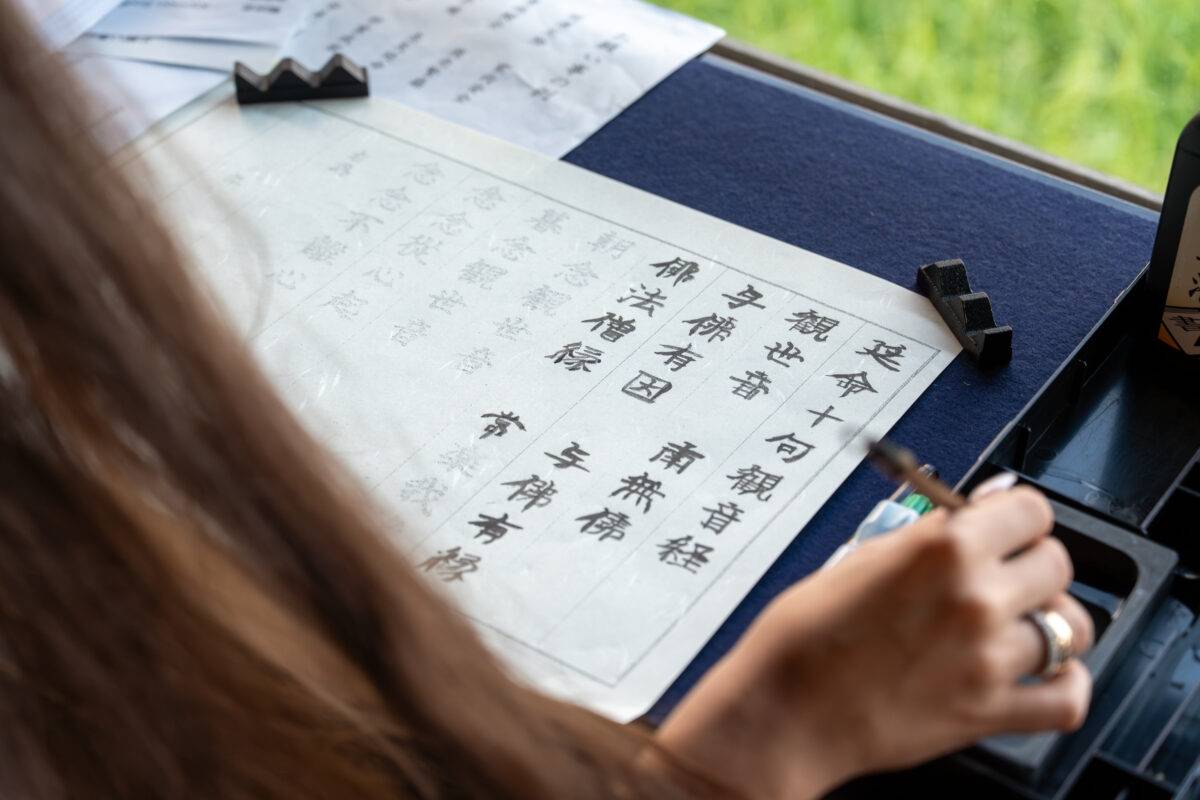
Heir to generations of custodians, she preserves Japan’s oldest tradition of sutra copying. She speaks sincerely of the challenges of being a woman leading a temple, yet her authority is unquestionable: firm, compassionate, deeply rooted. Together, these two women form a living bridge between ancient female leadership and the present.
During the visit, she guides guests in rewriting an ancient verse, a meditative gesture that for centuries has served to purify the mind and orient intention.
Once copied, the sutra is consecrated along with a personal wish, a thought entrusted to ink, breath, and ritual, then offered according to tradition so that the prayer may take its course.
The sequence concludes with a silent, essential tea ceremony inviting guests to internalize the meaning of the rite: calm as a form of strength, slowness as a form of presence.
Together, these two women trace a living bridge between ancient leadership and the present.
If the empresses of Asuka defined the political profile of their era, today it is these spiritual guides who safeguard the intimate dimension of power: continuity, dedication, and the courage to evolve without betraying memory.
As the sun sets and the light shifts from gold to indigo, the feminine history of Asuka finds a new language: taste.
At Auberge de Senvie, a quiet refuge overlooking hills and terraced fields, dinner becomes a natural extension of the journey, a way to approach the three empresses who shaped the Asuka era.
The gastronomic journey draws inspiration from the day’s theme “The Three Empresses of Asuka” recreating, in a contemporary way, the flavors once sent from various provinces to the ancient capital of Nara.
In homage to a practice lasting nearly thirteen centuries, when meat consumption was forbidden until the early Meiji era, the menu focuses on local fish, herbs, and vegetables, recovering the culinary sensibility of the period.
Each course evokes a different female figure:
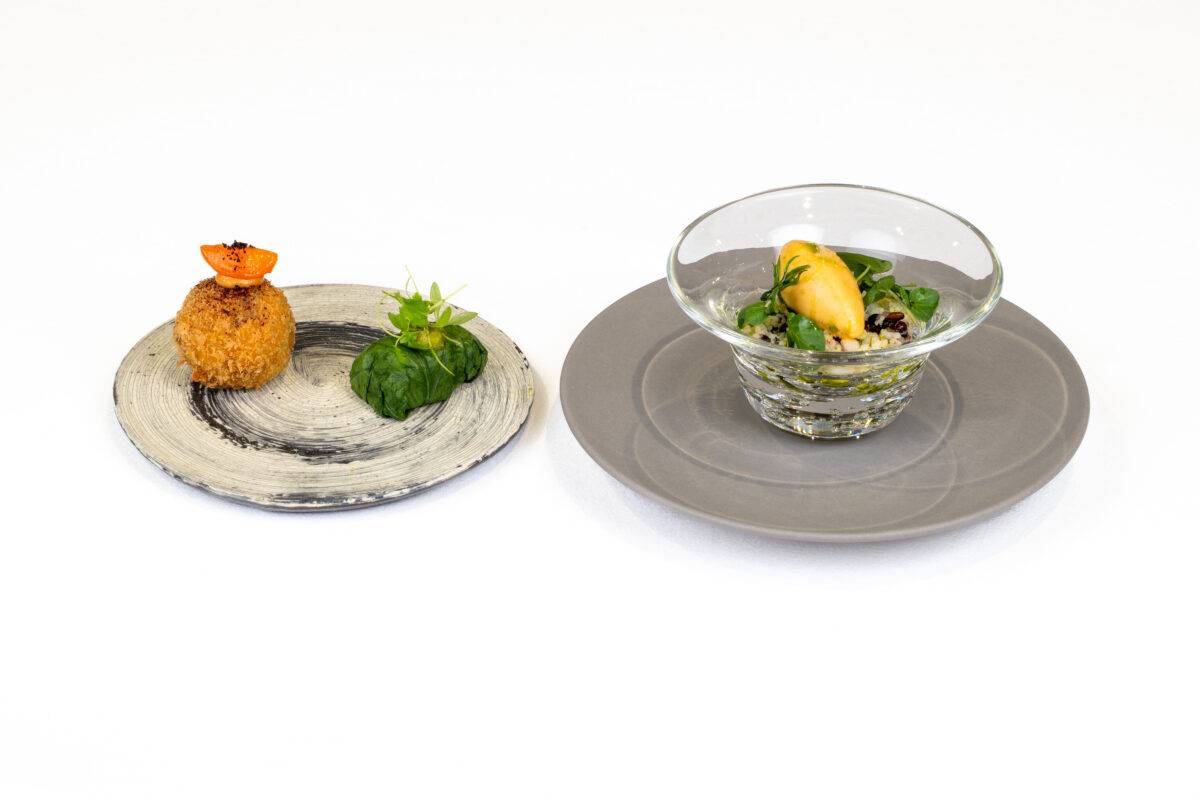
• Empress Saimei is recalled through a dish inspired by rain, a central element in her rituals for the fertility of the land, expressed through parsley oil and rice, symbols of prosperity.
• Empress Jitō is interpreted through ingredients found in her waka, such as turnip, and motifs inspired by Mount Amanokaguyama in the Manyōshū.
• Empress Suiko, promoter of international exchanges and the ritual of kusurigari, is celebrated with a circular creation combining taro introduced from China and kihada bark, a traditional herbal remedy from Nara.
The result is an experience that weaves together historical memory and modern sensibility:
a dinner that does not merely reconstruct the past, but reinterprets it with delicacy, transforming the stories of the sovereigns into flavors, textures, and symbols.
For those visiting Asuka, this experience offers a unique way to approach the vision and legacy of the women who shaped Japan’s birth: not through monuments or texts, but through a sensory journey that restores depth, time, and gratitude.
Morning in Asuka has an almost ceremonial air. Near the stone chamber of Ishibutai, the day begins with a slow, grounded yoga session, a movement that follows the rhythm of the earth in Asuka Historical Park.
Not a performance, but a return: the body listened to, the mind lightened, all surrounded by a beautiful natural landscape.
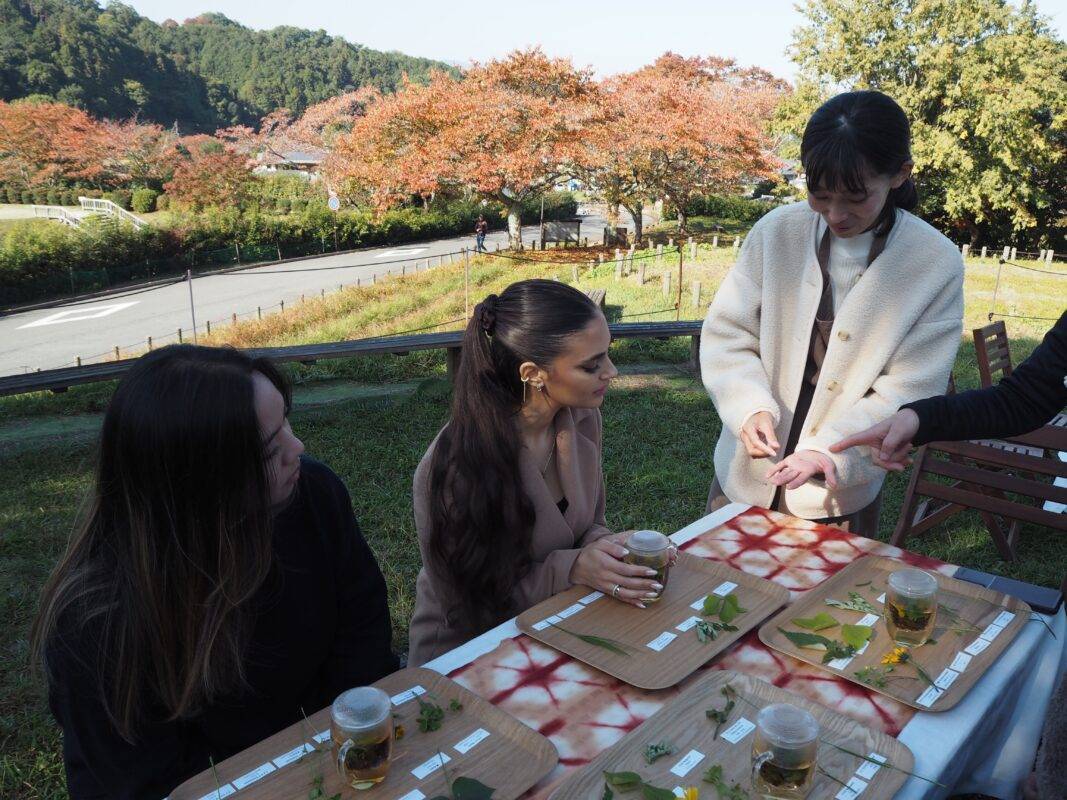
From this calm arises the transition to Asuka’s herbal culture, an inheritance that dates back to Empress Suiko, who practiced kusuri-gari, the seasonal gathering of medicinal plants in these very fields.
Participants prepare infusions made from local leaves, roots, and botanicals, choosing ingredients based on need or intuition.
This is followed by a breakfast shaped by the same philosophy: ancient steamed rice scented with herbs, stewed roots, seasonal vegetables, nourishment that seeks not grandeur, but balance and wellbeing.
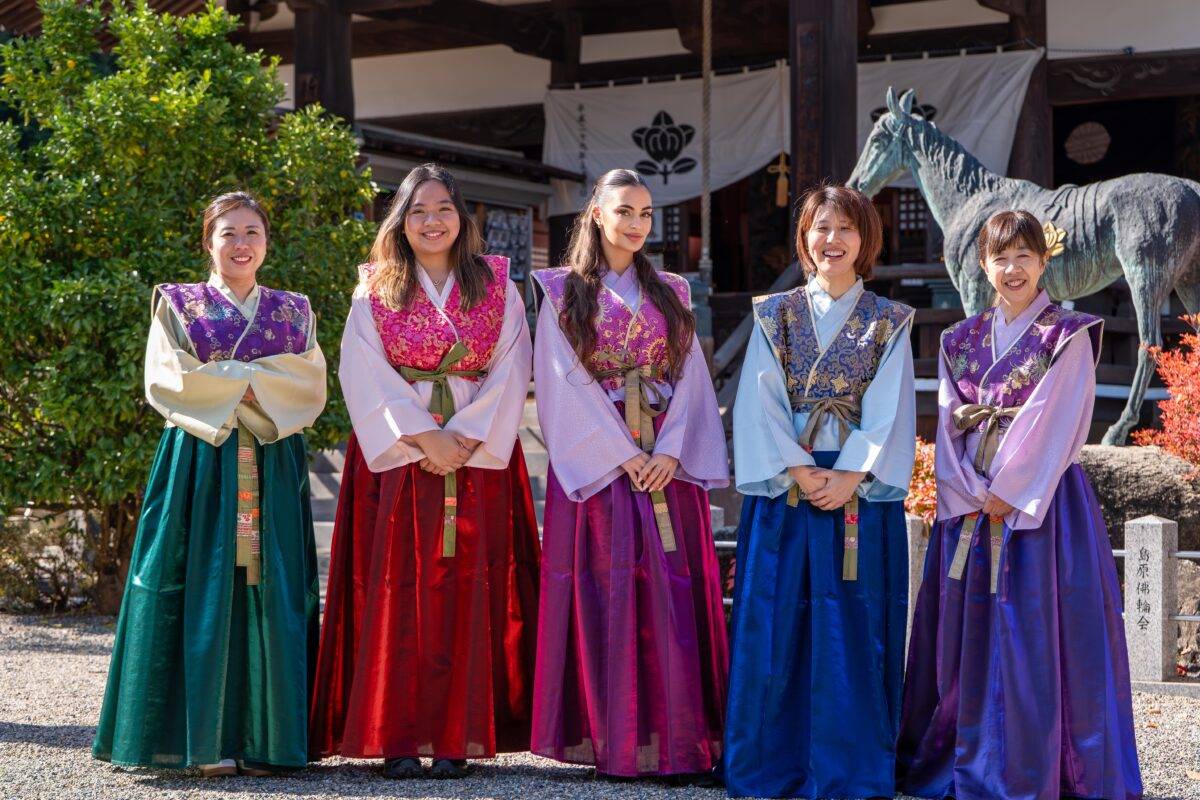
Late morning offers one of the most tactile moments of the experience: wearing exquisite imperial garments inspired by the ancient Asuka court, even older than kimono. All within the serene temple of Tachibana-dera, linked to the lineage of Prince Shōtoku.
Layers of silk, gold-trimmed hems, bright colors, beautiful decorations, and ceremonial sleeves: every element reflects a visual language, a social code, a spiritual aesthetic.
In the soft light filtered through wooden lattices, and along the temple paths, the garments seem to reactivate dormant memories, stitching together a bridge between past and present.
In Asuka, regeneration is not announced.
It manifests in the slow step, in respect for the landscape, in the work of the women of the shrines, in food shaped by season and memory.
Here, renewal is carried not only by the land, but by the women who have long safeguarded its spirit, a reminder that care, leadership, and continuity often move through feminine hands.
Travel here teaches reciprocity: a place gives back only what is welcomed with sincerity.
At Tricolage, we design journeys that honor this exchange:
experiences that regenerate both the traveler and the place, where culture is not consumed but encountered, and where history guides the present without being reduced by it.
Asuka is the origin of a country.
It is also an invitation to begin again: with attention, humility, and presence.